Custom Baseball Jackets: A Complete Manufacturing Guide for Clothing Brands
Baseball jackets have evolved far beyond the baseball field. Today, they are a popular choice for streetwear labels, varsity collections, college-inspired fashion, lifestyle brands, and team merchandise. Their recognizable silhouette, contrasting sleeves, ribbed trims, and customizable graphics make them a versatile product for clothing businesses looking to develop distinctive apparel.
For brands planning to launch a new collection, choosing the right custom baseball jacket manufacturer is an important step. The quality of the fabric, jacket construction, embroidery, patches, fit, and finishing can all influence how the finished product looks and performs.
Whether you are developing your first varsity jacket or expanding an established streetwear collection, understanding the manufacturing process helps you communicate your requirements clearly and make better production decisions.
1. What Is a Custom Baseball Jacket?
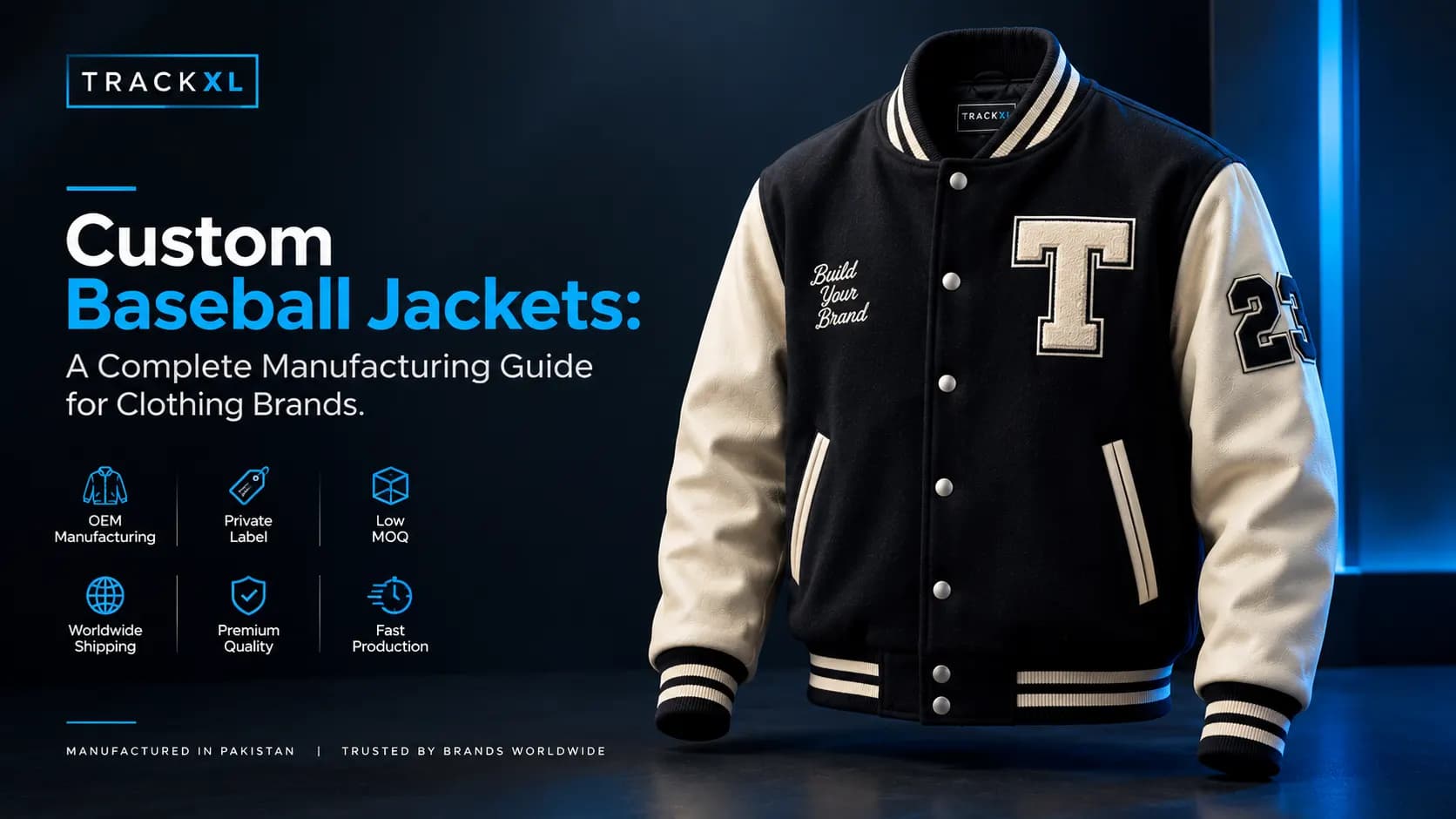
A custom baseball jacket, often called a varsity jacket or letterman jacket, is a jacket traditionally inspired by American baseball and college sportswear. Classic designs commonly feature a button-front closure, contrasting body and sleeve colors, ribbed cuffs, a ribbed collar, and a ribbed hem.
Modern versions are available in a wide range of styles, from traditional athletic jackets to oversized streetwear silhouettes with bold graphics and premium branding.
For clothing brands, customization makes it possible to develop a product that reflects a particular identity rather than relying on standard, ready-made designs.
Common customization options include:
Custom body and sleeve colors
Embroidered brand logos and lettering
Chenille letters and decorative patches
Custom buttons, zippers, and hardware
Contrast sleeves and panel designs
Ribbed collars, cuffs, and waistbands
Woven labels, size labels, and hangtags
Custom packaging and private-label branding
The final specifications depend on the design, materials, construction requirements, and intended retail positioning.
2. Choosing the Right Fabric for Baseball Jackets
Fabric selection is one of the most important decisions when developing a custom baseball jacket. The material affects the jacket's appearance, weight, structure, comfort, durability, and overall cost.
There is no single fabric that suits every design. A traditional varsity jacket and a lightweight streetwear jacket may require completely different materials.
Wool blends and wool-look fabrics
Wool-blend fabrics are commonly associated with traditional varsity jackets. They can provide a substantial feel and a structured appearance that works well with chenille lettering and embroidered patches.
The appropriate wool content, fabric weight, and lining should be selected according to the intended use, budget, and design requirements.
Polyester and blended fabrics
Polyester and polyester-blend fabrics can be suitable for lightweight baseball jackets, sports-inspired outerwear, and certain streetwear designs.
They offer flexibility in fabric selection, color development, and finishing. The final result depends on the specific fabric construction and quality.
Cotton and cotton-blend fabrics
Cotton and cotton-blend materials can suit casual jackets with a softer, more relaxed appearance. They may be appropriate for contemporary streetwear collections where comfort and everyday styling are priorities.
Leather and synthetic leather sleeves
Some varsity jacket designs feature contrasting sleeves made from genuine leather or synthetic alternatives, including PU leather.
These materials have different costs, textures, maintenance requirements, and performance characteristics. If a design specifies leather or PU, the material should be identified clearly in the product specifications rather than treating the two as interchangeable.
Manufacturer tip: Before confirming production, request clear information about the fabric composition, weight, color, lining, sleeve material, and finishing. If the material is critical to your brand, evaluate a physical sample before approving the bulk order.
3. Customization: What Makes a Varsity Jacket Stand Out?
A successful baseball jacket combines a recognizable silhouette with details that make the design distinctive. For clothing brands, customization should be planned as part of the original product development process.
Embroidery
Embroidery is a popular choice for brand names, chest logos, sleeve graphics, and smaller decorative elements. Stitch density, thread colors, placement, and artwork complexity can influence the final appearance.
Vector artwork or a clear, high-resolution logo helps the manufacturer assess the embroidery requirements.
Chenille patches
Chenille patches are widely associated with classic letterman jackets. Their raised, textured surface creates a bold visual effect that works particularly well for large letters, initials, and collegiate-style graphics.
Brands can customize patch shapes, colors, lettering, borders, and placement. Patch size and construction should be reviewed during sampling to ensure the design works with the selected jacket fabric.
Appliqué and layered graphics
Appliqué involves attaching shaped fabric pieces to the garment to create letters, numbers, symbols, or decorative panels. It can be combined with embroidery for a more detailed finish.
This option is useful for designs that need a dimensional appearance without relying entirely on printed graphics.
Buttons, zippers, and ribbed trims
Small construction details can make a significant difference to the final product. Button color, zipper finish, stripe patterns on the ribbing, and contrast panels should all match the approved design.
For a cohesive collection, keep these details consistent across sizes and colorways unless the design calls for deliberate variations.
4. How to Develop a Jacket That Matches Your Brand
Before requesting a manufacturing quotation, prepare a clear design brief. The more accurately you communicate the product you want, the easier it becomes to evaluate feasibility, estimate costs, and identify potential production issues.
Your design brief should cover the following details:
Jacket silhouette: Decide whether you want a classic varsity fit, a regular fit, a relaxed fit, or an oversized streetwear silhouette.
Measurements and sizing: Provide a size chart with garment measurements, including chest width, body length, shoulder width, sleeve length, and cuff dimensions where relevant.
Fabric and lining: Specify the preferred composition, weight, texture, lining, and sleeve material.
Colors: Provide color references, such as Pantone codes where appropriate, and identify the colors required for each panel and trim.
Branding: Indicate the placement and dimensions of embroidery, chenille patches, appliqué, labels, and other decorative elements.
Hardware and finishing: Specify buttons, zippers, ribbing, pocket construction, and any additional design details.
Packaging: Identify the required hangtags, woven labels, care labels, branded bags, or other retail packaging components.
If you do not have a complete technical pack, start with clear reference images, a rough sketch, your logo files, and a list of requirements. These materials can help establish the initial development brief, although a final quotation may require additional specifications.
5. Why Sampling Matters Before Bulk Production
A sample gives your brand an opportunity to review the product before committing to a larger quantity. This is particularly important for varsity jackets because their appearance depends on several components working together.
During sample evaluation, review:
Fabric hand feel, weight, and overall appearance
Fit, proportions, and garment measurements
Sleeve attachment and seam construction
Ribbing, buttons, zippers, and pocket finishing
Embroidery quality and patch placement
Color consistency and material matching
Label placement and packaging requirements
If changes are needed, document them clearly and request revisions before bulk production begins.
Once the sample is approved, retain the approved reference and confirm the final specifications with your manufacturer. This creates a clearer standard for the production order.
Sample charges, development time, and shipping costs should be confirmed separately because they depend on the design and destination.
6. Understanding Minimum Order Quantities and Bulk Pricing
Minimum order quantities (MOQs) and pricing vary between manufacturers. A jacket with multiple fabrics, custom ribbing, complex embroidery, chenille patches, and specialized hardware may require a different production setup from a simpler design.
When comparing manufacturing quotations, ask whether the price includes:
Main fabric and lining
Cutting, stitching, and finishing
Embroidery, appliqué, or chenille patches
Buttons, zippers, and other hardware
Brand labels and hangtags
Individual packaging
Quality inspection
Shipping and applicable import charges
Do not compare prices based only on the garment's appearance. Two jackets may look similar in a photograph but differ significantly in materials, construction, decoration, and finishing.
For growing brands, it is also useful to discuss size distribution, color options, repeat orders, and whether the manufacturer can maintain consistent specifications across future production runs.
7. Private-Label Baseball Jacket Manufacturing
Private-label manufacturing allows a business to develop jackets under its own brand identity rather than selling products with another company's branding.
Depending on the manufacturer's capabilities and the agreed specifications, a private-label jacket project may include custom colors, brand logos, woven labels, care labels, hangtags, and packaging.
OEM manufacturing is particularly useful for brands that already have a design or technical pack and need a production partner to manufacture the product to their specifications.
When selecting a manufacturing partner, evaluate more than the initial quotation. Consider communication, sampling procedures, quality-control practices, production planning, and the manufacturer's ability to understand your technical requirements.
A clear agreement on specifications and approvals helps reduce misunderstandings during production.
8. How to Choose a Custom Baseball Jacket Manufacturer
Choosing the right manufacturing partner is an important decision for any clothing brand. Before placing an order, consider these factors.
Relevant product experience: Ask whether the manufacturer can produce your specific jacket construction, including the required fabrics, sleeves, ribbing, and decorative elements.
Customization capabilities: Confirm which embroidery, patch, appliqué, labeling, and packaging options are available for your project.
Sampling process: Understand how samples are developed, how revisions are handled, and when bulk production can begin.
Quality control: Ask how measurements, stitching, decoration, materials, and finished garments are checked.
Communication: Choose a partner that can explain technical details, identify missing specifications, and provide clear production updates.
Shipping arrangements: Confirm the shipping method, destination, estimated transit time, and whether customs duties or other import charges are included.
Quotation transparency: Request a breakdown of product costs, sampling, packaging, and shipping so that you can estimate the total landed cost of your order.
These questions help you make a more informed decision and establish a practical working relationship with your manufacturing partner.
9. Custom Baseball Jackets for Streetwear and Retail Collections
Baseball jackets can work across several product categories, making them an interesting option for brands developing more than one type of collection.
Streetwear brands can explore oversized fits, contrast sleeves, large chenille graphics, and embroidered back designs. College-inspired labels may prefer traditional letterman details and coordinated colors. Sports retailers and organizations may prioritize recognizable team colors, logos, and consistent sizing.
For a coordinated collection, brands can develop complementary products such as heavyweight T-shirts, hoodies, sweatpants, or other apparel that uses the same colors and visual identity.
However, each product should be developed with its own appropriate fabric, construction, and fit specifications rather than applying one specification to every garment.
The best starting point is a clear concept, a defined target customer, and a realistic production budget.
10. Develop Your Custom Baseball Jacket Collection with TrackXL
TrackXL is a custom apparel manufacturer based in Sialkot, Pakistan, working with clothing brands, sports organizations, and B2B buyers seeking customized apparel for their businesses.
For brands exploring baseball and varsity-inspired jackets, the first step is to share the design concept and confirm the required construction, materials, decoration, quantity, and branding details. These specifications allow the manufacturing team to assess the project and discuss the available production options.
When contacting TrackXL, prepare the following information:
Jacket reference images or technical pack
Required fabric and sleeve materials
Preferred colors and sizing
Logo files and decoration placements
Estimated order quantity
Labeling and packaging requirements
Delivery destination and target date
This information helps establish the scope of your project and supports a more useful manufacturing quotation.
To explore TrackXL's existing baseball apparel range, visit the Baseball category. For a custom project, contact the team through the TrackXL contact page and share your requirements for review.
Frequently Asked Questions
What is the difference between a baseball jacket and a varsity jacket?
The terms are often used interchangeably for similar button-front jackets with ribbed trims and contrasting panels. Varsity jackets are strongly associated with American school and college traditions, while baseball jackets can also refer to sports-inspired designs developed for casual fashion and streetwear.
Which fabric is best for custom varsity jackets?
The best fabric depends on the intended style and budget. Wool blends can suit traditional varsity designs, while polyester blends and cotton-based fabrics may work for lighter or more casual versions. The fabric should be selected alongside the lining, sleeve material, and intended fit.
Can clothing brands customize chenille patches and embroidery?
Yes, these are common customization options for varsity-style apparel. The availability, minimum quantities, cost, and production requirements depend on the design and manufacturing setup.
What information is needed for a manufacturing quotation?
Provide reference images or a technical pack, materials, colors, measurements, branding requirements, order quantity, packaging preferences, and delivery destination. A complete specification helps the manufacturer estimate costs more accurately.
Should I approve a sample before placing a bulk order?
A pre-production sample is strongly recommended, especially for a new design. It allows you to review fit, materials, construction, decoration, and finishing before approving the bulk production specifications.
Can a startup clothing brand order custom baseball jackets?
This depends on the manufacturer's MOQ, material availability, and customization requirements. Startups should discuss the planned quantity and design complexity early so that the manufacturer can clarify feasible production options.
Final Thoughts
A successful custom baseball jacket begins with the right combination of fabric, construction, branding, and fit. For clothing brands, a well-defined technical brief and an approved sample provide a stronger foundation for consistent bulk production.
Whether you are building a varsity-inspired streetwear collection or developing branded jackets for retail, take the time to define your specifications and evaluate your manufacturing partner before committing to an order.
Ready to discuss your next apparel project? Visit TrackXL to explore custom apparel options and submit your requirements for a manufacturing quotation.