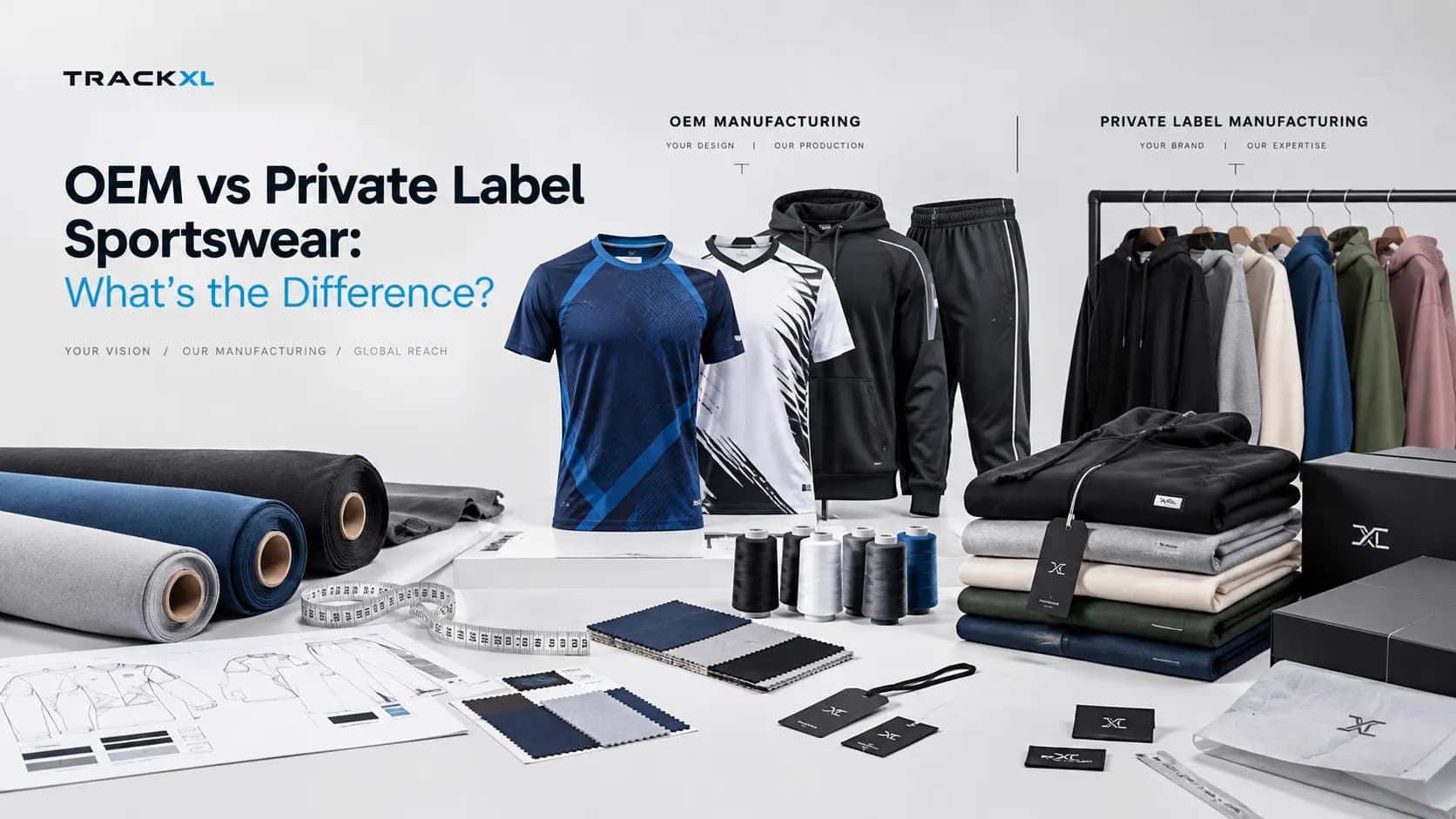
OEM vs Private Label Sportswear: What's the Difference?
If you're planning to launch a sportswear brand, expand your activewear collection, or find a reliable clothing manufacturer, you may have come across two common terms: OEM manufacturing and private label manufacturing.
Although OEM and private label are often mentioned together, they are not exactly the same thing.
Understanding the difference between OEM vs private label sportswear can help you choose the right manufacturing approach for your brand. Your decision can affect your product customization, development process, production time, costs, branding options, and overall control over your collection.
For example, some brands want to create completely custom sportswear based on their own designs and technical specifications. Others want to launch products under their own brand name using an existing product base with customized labels, logos, and packaging.
Both options can be valuable. The right choice depends on your business goals.
In this guide, we'll explain the difference between OEM sportswear manufacturing and private label sportswear, how each model works, and which option may be better for your brand.
What Is OEM Sportswear Manufacturing?
OEM stands for Original Equipment Manufacturer.
In the sportswear industry, OEM manufacturing generally involves a manufacturer producing products according to a client's specific requirements.
The brand or customer may provide detailed information about the product, including:
Product designs
Tech packs
Measurements
Size charts
Fabric requirements
GSM requirements
Colors
Printing details
Embroidery details
Logo placement
Labels
Packaging specifications
The manufacturer then develops and produces the sportswear based on those requirements.
Example of OEM Sportswear Manufacturing
Imagine you are launching a new gymwear brand.
You have designed an oversized performance T-shirt with a specific fit, fabric composition, GSM, stitching details, logo placement, and custom neck label.
You provide your manufacturer with a tech pack or detailed product specifications.
The manufacturer may then help with:
Fabric sourcing
Pattern development
Sample production
Sample revisions
Bulk manufacturing
Printing or embroidery
Quality control
Private labeling and packaging
The final product is manufactured specifically according to your brand's requirements.
This is one of the biggest advantages of OEM sportswear manufacturing: a higher level of control over the final product.
What Is Private Label Sportswear?
Private label sportswear refers to products that are sold under your own brand name.
With private label manufacturing, a business works with a manufacturer to produce or supply products that carry the business's own branding.
Depending on the manufacturer and project requirements, private label customization may include:
Custom brand labels
Neck labels
Woven labels
Hang tags
Logo printing
Embroidery
Custom colors
Custom packaging
Poly bags
Brand stickers
Private label can be an attractive option for startups and growing brands because it allows them to build their own brand identity without necessarily developing every product from scratch.
Example of Private Label Sportswear
Suppose you want to launch a fitness clothing brand.
You select a suitable hoodie, T-shirt, tracksuit, or activewear style from a manufacturer's available product options or development capabilities.
You then customize the products with:
Your brand logo
Custom labels
Hang tags
Packaging
Selected colors or design elements
The products are then sold under your own brand name.
The level of customization can vary depending on the manufacturer and the product development process.
OEM vs Private Label Sportswear: The Main Difference
The simplest way to understand the difference is this:
OEM focuses primarily on manufacturing products according to specific customer requirements, while private label focuses on selling products under your own brand identity.
However, in real-world clothing manufacturing, the two models can sometimes overlap.
For example, a brand may develop a completely custom product through an OEM manufacturing process and then add its own labels, packaging, and branding.
That means a custom OEM product can also become part of a private label collection.
The important difference is usually the level of product development and customization involved.
OEM vs Private Label Sportswear: Quick Comparison
Although OEM and private label sportswear can sometimes overlap, there are several important differences between the two manufacturing approaches.
Product Development
OEM Sportswear: Products are developed according to the customer's specific requirements, designs, measurements, and technical specifications.
Private Label Sportswear: Products may start from an existing style or simpler product base, which can then be customized for the brand.
Product Design Control
OEM Sportswear: Usually provides greater control over product design, fit, construction, and specifications.
Private Label Sportswear: The level of design control depends on how much customization the manufacturer offers.
Tech Pack Requirements
OEM Sportswear: A tech pack is often recommended, especially when developing a completely custom product.
Private Label Sportswear: A complete tech pack may not always be required if the manufacturer already has an existing product specification.
Fabric Customization
OEM Sportswear: Generally offers more flexibility when selecting fabric type, GSM, composition, stretch, and performance requirements.
Private Label Sportswear: Fabric options depend on the manufacturer's available products and customization capabilities.
Fit and Measurements
OEM Sportswear: The brand can provide specific measurements and fit requirements for product development.
Private Label Sportswear: The product may follow an existing fit and measurement specification, although some manufacturers offer customization.
Branding and Labels
OEM Sportswear: Custom branding such as logos, neck labels, woven labels, and hang tags can be incorporated into the product.
Private Label Sportswear: Custom branding is one of the main benefits, allowing products to be sold under your own brand name.
Packaging
OEM Sportswear: Packaging can often be customized according to the brand's requirements.
Private Label Sportswear: Brands can also request customized packaging, tags, stickers, and other branded materials depending on the manufacturer.
Product Development Process
OEM Sportswear: The process can involve more stages, including design review, fabric selection, pattern development, sampling, revisions, and final production.
Private Label Sportswear: The process can be simpler when starting with an existing product and focusing primarily on branding and selected customization.
Time to Market
OEM Sportswear: Custom product development may take longer because additional sampling and development stages may be required.
Private Label Sportswear: Can sometimes offer a faster route to market when using an existing product base.
Product Uniqueness
OEM Sportswear: Provides greater potential for creating a unique product specifically designed for your brand.
Private Label Sportswear: Uniqueness depends on the level of customization available from the manufacturer.
Which Is Best for Your Brand?
OEM sportswear manufacturing may be better for brands with specific product ideas, detailed specifications, or a strong focus on creating unique products.
Private label sportswear manufacturing may be more suitable for startups and growing brands that want to build their own brand identity while using an existing or simpler product base.
Every manufacturer works differently, so always confirm the MOQ, production timeline, customization options, sampling process, and pricing before starting production.
OEM Sportswear Manufacturing: Advantages and Disadvantages
OEM manufacturing can be an excellent option for brands that want to create something unique.
Advantages of OEM Manufacturing
1. Greater Product Customization
OEM gives brands more control over product specifications.
You may be able to customize:
Fabric
GSM
Fit
Measurements
Colors
Stitching
Printing
Embroidery
Labels
Packaging
This is especially valuable for brands that want to create a distinctive product rather than selling a generic design.
2. Better Brand Differentiation
A unique product can help your sportswear brand stand out in a competitive market.
For example, you may develop:
A unique oversized gym T-shirt
A custom football jersey
A performance tracksuit
A specialized training uniform
A premium heavyweight hoodie
Custom activewear
Your product specifications can become part of your brand identity.
3. More Control Over Quality and Materials
With a detailed product specification, brands can have more involvement in important manufacturing decisions.
For example:
What fabric should be used?
What GSM is required?
What type of stitching is needed?
How should the logo be applied?
What type of labels should be included?
A clear tech pack and approval process can help manufacturers understand the expected product requirements.
4. Suitable for Long-Term Brand Development
OEM manufacturing can be a strong option for brands that are building a long-term product collection.
Instead of relying only on standard styles, a brand can develop products specifically for its target customers.
Disadvantages of OEM Manufacturing
OEM product development may require more planning.
Depending on the product, the process may involve:
Product specifications
Tech pack development
Pattern development
Sample production
Sample revisions
Material selection
Because every product is different, development requirements can vary significantly.
OEM manufacturing may also require additional time compared with using an existing product base.
Private Label Sportswear: Advantages and Disadvantages
Private label manufacturing is often attractive to businesses that want to build their own brand identity.
Advantages of Private Label Sportswear
1. Build Your Own Brand
Private label allows you to sell products under your own brand name.
Instead of promoting the manufacturer's brand, you can create your own identity through:
Brand labels
Logos
Hang tags
Packaging
Product presentation
This can help businesses build recognition and customer loyalty.
2. Potentially Faster Product Launch
Depending on the product and manufacturer, private label manufacturing can sometimes reduce the amount of product development required.
For example, a brand may begin with an existing product style and focus on branding and selected customization.
This can be useful for:
New sportswear brands
Online clothing businesses
Fitness brands
Retailers
Startup businesses
3. Lower Product Development Complexity
Creating a completely new product can require detailed specifications and multiple development stages.
Private label may offer a simpler starting point when a brand does not yet have a complete tech pack or custom product design.
However, customization options vary from manufacturer to manufacturer.
4. Focus More on Branding and Marketing
When the product development process is simpler, businesses may be able to focus more on:
Brand development
Marketing
Photography
E-commerce
Social media
Customer acquisition
This can be especially useful for startups.
Disadvantages of Private Label Sportswear
Private label products may offer less control over certain product details compared with a fully customized OEM development process.
For example, some product specifications may already be established, including:
Basic fit
Construction
Available fabrics
Existing product styles
The exact level of flexibility depends on the manufacturer.
If your goal is to create a completely unique product, an OEM development process may be more suitable.
OEM vs Private Label: Which Is Better for Your Sportswear Brand?
There is no single answer for every business.
The right choice depends on your brand's goals, budget, product requirements, and stage of development.
Choose OEM Sportswear Manufacturing If You:
OEM may be a better option if:
You have a unique product idea
You want a custom fit
You have specific fabric requirements
You want detailed control over product construction
You have a tech pack or detailed specifications
You want to develop a unique collection
Product differentiation is important to your brand
OEM can be particularly suitable for established brands or startups that already have a clear product concept.
Choose Private Label Sportswear If You:
Private label may be a better option if:
You are launching a new brand
You want to sell under your own brand name
You want to focus on branding
You do not yet have a complete product development system
You want a potentially simpler starting point
You want to customize labels, logos, and packaging
Private label can be a practical way to build a branded sportswear collection.
Can You Combine OEM and Private Label Sportswear?
Yes.
In fact, many brands use elements of both approaches.
For example, a sportswear brand may create a custom product through an OEM manufacturing process.
The brand provides:
A custom design
Fabric requirements
Measurements
Printing details
Product specifications
The manufacturer develops and produces the product.
After manufacturing, the product includes:
Custom neck labels
Woven labels
Hang tags
Brand packaging
The final product is then sold under the customer's own brand.
In this situation, the manufacturing process involves OEM product development, while the finished product is part of the brand's private label collection.
This is why it is important to discuss your specific requirements with a manufacturer rather than relying only on general industry labels.
What Is the Difference Between OEM, Private Label, and White Label?
These terms are sometimes confused, but they generally describe different approaches.
OEM
OEM manufacturing focuses on producing a product based on the customer's specifications.
The customer may have significant control over:
Design
Materials
Measurements
Product details
Private Label
Private label products are sold under the customer's own brand name.
The product may be customized to different levels depending on the manufacturing arrangement.
White Label
White label products are generally more standardized products that can be sold under different brands.
The level of product customization is often more limited compared with a fully customized OEM product.
For a serious sportswear brand that wants to build a distinctive collection, discussing customization and product development requirements directly with a manufacturer is usually more important than focusing only on terminology.
What Products Can Be Made Through OEM Sportswear Manufacturing?
OEM manufacturing can be used for many different types of apparel.
Examples include:
Custom football jerseys
Basketball uniforms
Cricket uniforms
Rugby jerseys
Baseball uniforms
Tracksuits
Hoodies
Sweatshirts
Gym T-shirts
Oversized T-shirts
Activewear
Gymwear
Joggers
Training wear
Team uniforms
Streetwear apparel
The manufacturing process depends on the product and required customization.
For example, a custom football jersey may require:
Performance polyester fabric
Sublimation printing
Team logos
Player names
Numbers
Custom colors
Club branding
A heavyweight streetwear hoodie may require completely different specifications, such as:
Heavyweight fabric
Custom fit
Puff printing
Embroidery
Woven labels
Custom packaging
What Should You Prepare Before Contacting an OEM Sportswear Manufacturer?
The more clearly you explain your product requirements, the easier it is for a manufacturer to understand your project.
You may want to prepare:
1. Product Idea
Explain what type of product you want to create.
For example:
Oversized heavyweight gym T-shirt for a premium fitness brand.
2. Reference Images
Reference images can help communicate your preferred:
Style
Fit
Colors
Details
Design direction
However, your manufacturer should still understand the exact specifications required for production.
3. Tech Pack
A tech pack can include detailed information such as:
Measurements
Size chart
Fabric
Construction details
Logo placement
Printing details
Labels
A professional tech pack can help reduce misunderstandings during product development.
4. Fabric Requirements
If you know your preferred material, provide information about:
Fabric type
Composition
GSM
Stretch requirements
Performance requirements
For example, sports jerseys and heavyweight streetwear products often require very different fabrics.
5. Branding Requirements
Explain what branding you need.
This may include:
Neck labels
Woven labels
Hang tags
Printed logos
Embroidery
Packaging
How to Choose the Right OEM or Private Label Sportswear Manufacturer
Choosing the right manufacturer is an important decision for any sportswear brand.
Before starting production, consider the following factors.
Manufacturing Experience
Look for a manufacturer with relevant experience in the type of products you want to produce.
For example:
Football jerseys
Gymwear
Tracksuits
Activewear
Streetwear
Team uniforms
Different products require different manufacturing knowledge.
Product Customization
Ask what parts of the product can be customized.
Important questions may include:
Can you customize the fabric?
Can you develop a custom pattern?
Can you create custom measurements?
Can you add private labels?
Can you create custom packaging?
What printing and embroidery options are available?
Sample Development
Before placing a bulk order, ask about the sample process.
A sample can help you evaluate:
Fit
Fabric
Construction
Printing
Colors
Branding
Overall quality
Make sure the sample approval process is clear before moving into bulk production.
Quality Control
Quality control is important in apparel manufacturing.
Ask how products are inspected before shipment.
Quality checks may involve areas such as:
Measurements
Stitching
Printing
Fabric
Labels
Packaging
Clear communication about quality expectations can help prevent problems.
Communication
Good communication is essential when working with an overseas manufacturer.
Your manufacturer should clearly understand:
Your product requirements
Production expectations
Sample feedback
Branding requirements
Delivery requirements
Clear documentation can make the production process more efficient.
How TrackXL Supports OEM and Private Label Sportswear Brands
At TrackXL, we work with sportswear brands, startups, teams, retailers, and businesses looking for custom apparel manufacturing solutions.
Depending on your project requirements, we can support different levels of product customization and brand development.
Our manufacturing capabilities include:
Custom sportswear manufacturing
OEM manufacturing
Private label solutions
Custom product development
Custom designs
Football jerseys
Sports uniforms
Gymwear
Tracksuits
Hoodies
T-shirts
Streetwear
Custom labels
Hang tags
Packaging
Sublimation printing
Screen printing
DTF printing
Embroidery
Whether you have a complete tech pack, a product concept, reference images, or an existing design, the first step is understanding your manufacturing requirements.
OEM vs Private Label Sportswear: Frequently Asked Questions
What is the difference between OEM and private label sportswear?
OEM sportswear manufacturing generally focuses on producing products according to a customer's specific requirements, while private label focuses on selling products under the customer's own brand identity.
The two approaches can sometimes overlap. For example, a custom OEM product can also include private labels and custom packaging.
Is OEM better than private label?
Neither option is automatically better.
OEM may be more suitable for brands that want greater control over product development and customization.
Private label may be suitable for brands that want to launch products under their own identity with a potentially simpler product development process.
The best option depends on your brand and product requirements.
Do I need a tech pack for OEM sportswear?
A tech pack is highly useful for communicating detailed product requirements.
However, the exact requirements depend on the manufacturer and the complexity of the product.
If you do not have a complete tech pack, you may still be able to discuss your product idea using reference images, measurements, and detailed specifications.
Can startups work with an OEM sportswear manufacturer?
Yes.
Many startups work with manufacturers to develop custom products and build their own sportswear brands.
However, startups should understand the requirements involved in product development, sampling, branding, MOQ, production timelines, and quality control.
Can I add my own labels and packaging?
In many private label and OEM manufacturing arrangements, brands can request custom branding elements such as:
Neck labels
Woven labels
Hang tags
Packaging
Available options depend on the manufacturer's capabilities and the project requirements.
Can I create a completely custom sportswear product?
Yes, OEM manufacturing can be used to develop custom sportswear based on detailed specifications.
The level of customization may include:
Fabric
Fit
Measurements
Colors
Printing
Stitching
Branding
A detailed tech pack or product specification can help communicate your requirements.
Final Thoughts: OEM or Private Label Sportswear?
Choosing between OEM vs private label sportswear depends on how much control you want over your products and how you plan to build your brand.If you want to develop a completely customized product with specific materials, measurements, and construction details, OEM sportswear manufacturing may be the better approach.If your primary goal is to launch products under your own brand identity and focus on branding, private label sportswear may provide a practical solution.In many cases, brands can combine both approaches by developing custom products and selling them under their own private label.The most important step is to clearly define your product requirements and work with a manufacturer that understands your brand goals.If you're looking for an OEM or private label sportswear manufacturer, TrackXL can help you explore custom manufacturing and branding options for your next collection.Contact TrackXL today to discuss your custom sportswear manufacturing requirements and start developing your next product collection.