Starting a sportswear brand is easier than ever—but building a product that customers actually want requires the right products, specifications, manufacturer, and sourcing strategy.
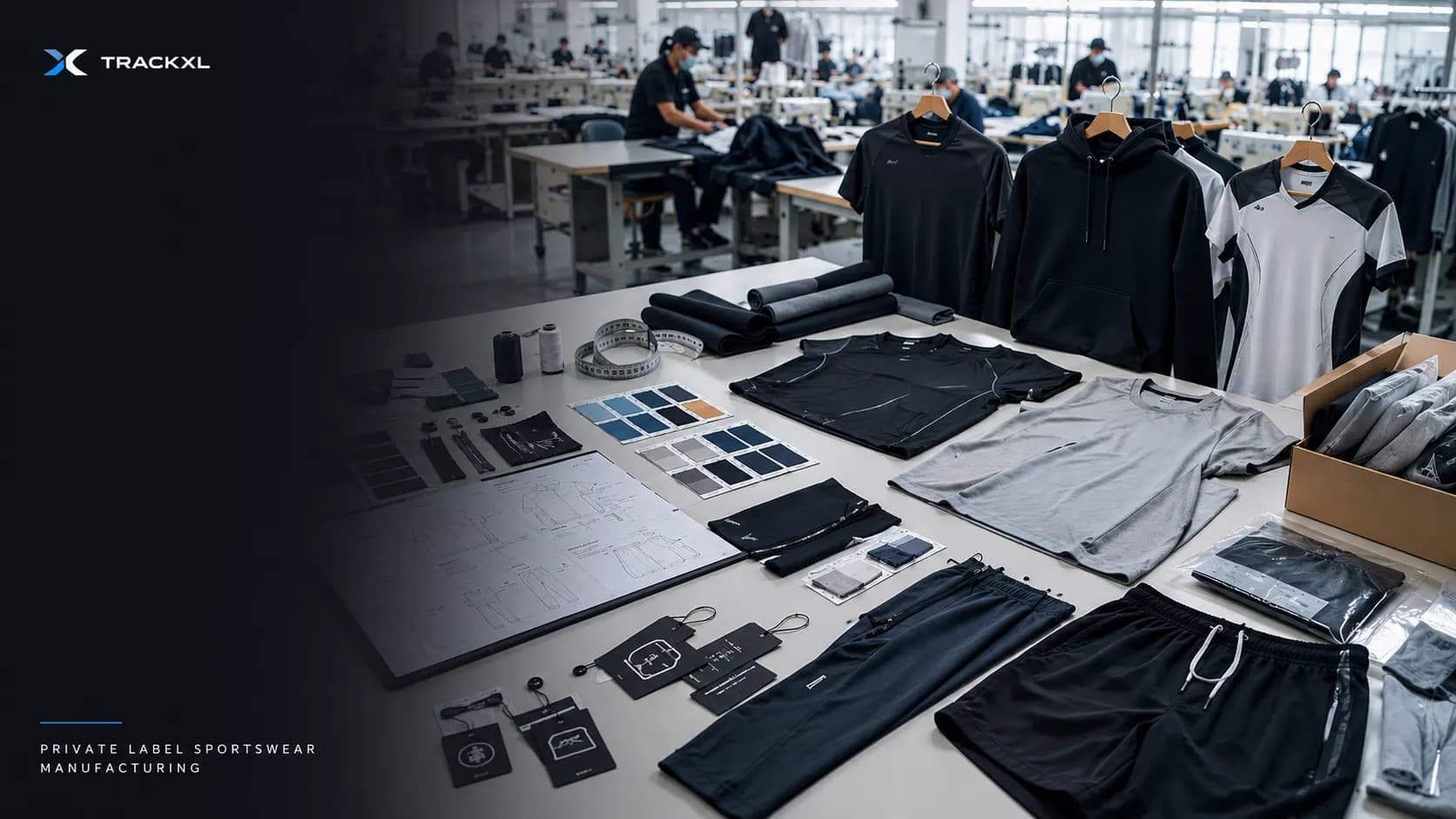
Private label manufacturing gives entrepreneurs and established businesses a way to launch sportswear under their own brand without owning a factory. You choose the products, fabrics, colors, branding, labels, packaging, and specifications, while an experienced manufacturer handles development and production.
But choosing a manufacturer is only one part of the process.
You also need to understand MOQ, fabric and GSM, product development, tech packs, sampling, quality control, packaging, shipping, and total landed cost.
This guide explains how to start a private label sportswear brand in 2026—from choosing your niche and products to finding a manufacturer and placing your first production order.
What Is Private Label Sportswear?
Private label sportswear is apparel manufactured by a third-party factory and sold under your own brand name.
Instead of selling a manufacturer's existing brand, you create your own identity around the products.
Your brand can control:
Product designs
Colors
Fabrics
GSM
Measurements and fit
Logos
Woven labels
Size labels
Hang tags
Packaging
Product names
Brand identity
The manufacturer handles the production according to the agreed specifications.
For new businesses, this model can be much more practical than investing in manufacturing equipment, production staff, and a factory.
Private Label vs OEM vs ODM
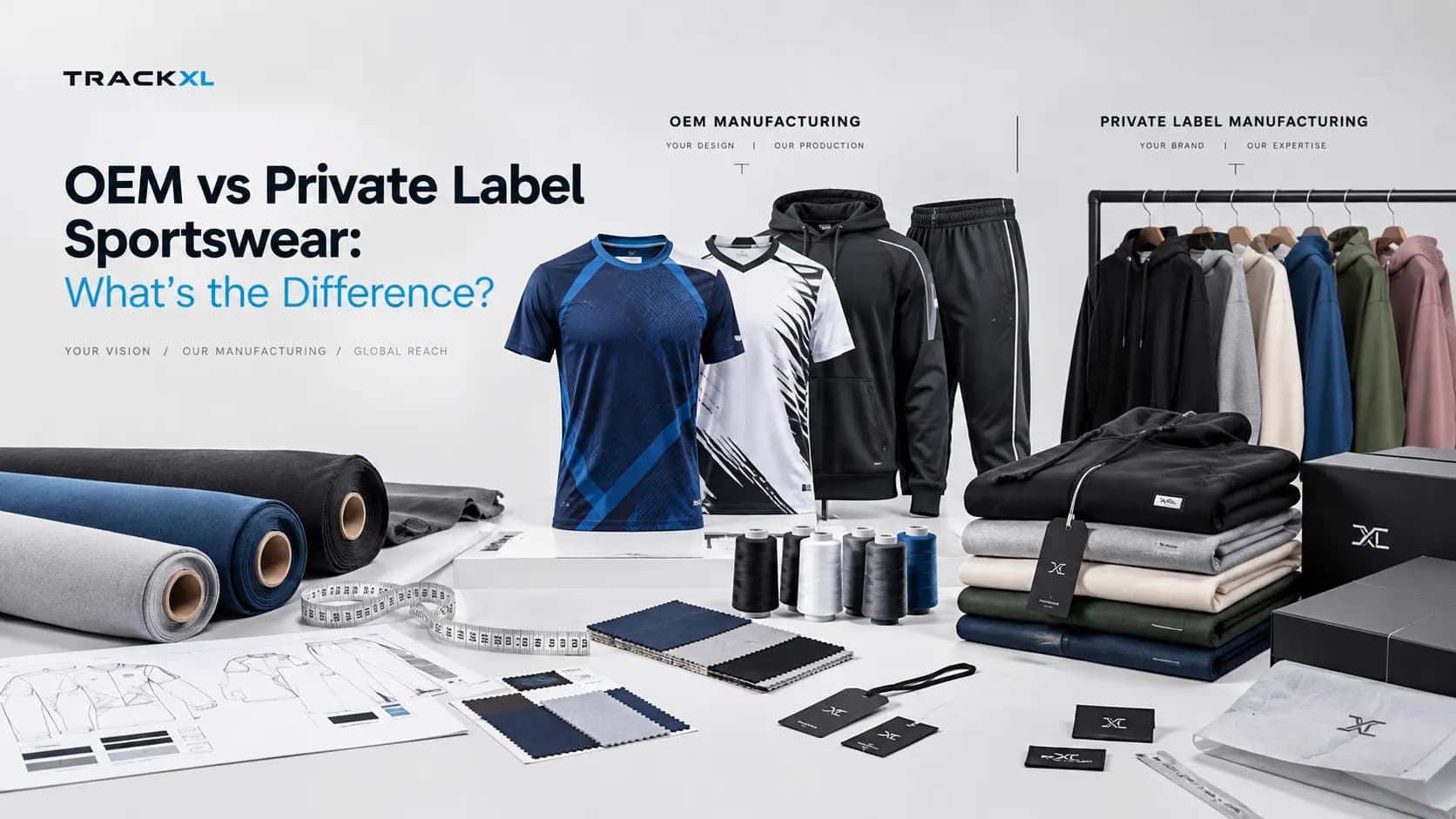
These terms are often used interchangeably, but they describe different approaches.
Manufacturing Model How It Works Best For Private Label . A manufacturer produces products that are sold under your brand and can include your branding, labels and packaging. Startups, retailers and established brands OEM .The manufacturer produces according to your specific design, measurements, materials and technical requirements .Brands wanting greater product control ODM The manufacturer starts with an existing product/design that can be modified for your brand. Brands looking for faster product development Wholesale You purchase existing products with limited customization. Businesses testing products with minimal development
The right option depends on your budget, timeline, product requirements and desired level of customization.
1. Choose Your Sportswear Niche
One of the biggest mistakes new brands make is trying to sell everything.
Instead of launching dozens of unrelated products, start with a clear customer and product category.
Potential sportswear niches include:
Gym & Fitness Wear
Training T-shirts
Gym shorts
Leggings
Sports bras
Compression wear
Hoodies
Joggers
Football & Soccer
Football jerseys
Shorts
Training kits
Tracksuits
Teamwear
Training tops
Basketball
Basketball jerseys
Shorts
Warm-up suits
Training apparel
Combat Sports
MMA shorts
Rash guards
Boxing shorts
Training shirts
Compression wear
Running & Performance
Running T-shirts
Performance shorts
Lightweight jackets
Compression garments
Athleisure & Streetwear
Oversized T-shirts
Hoodies
Sweatshirts
Joggers
Tracksuits
Cricket
Cricket jerseys
Training shirts
Team kits
Tracksuits
The goal isn't to manufacture everything. The goal is to build a focused product range that makes sense for your target customer.
2. Decide What Products to Launch
Once you choose your niche, decide which products should make up your first collection.
For example, a new gym wear brand could start with:
Performance T-shirt
Gym shorts
Oversized T-shirt
Hoodie
Joggers
A football-focused brand might start with:
Custom jersey
Football shorts
Training top
Tracksuit
Training pants
Starting with a smaller collection gives you better control over:
Manufacturing costs
Inventory
Sampling
Branding
Photography
Marketing
Quality control
You can expand the collection after you understand which products your customers actually want.
3. Define Your Target Customer
Before contacting a manufacturer, know who you're manufacturing for.
Ask yourself:
Who will buy the product?
What country are they in?
What age group are you targeting?
What price range are they comfortable with?
Are they athletes, gym users, teams or lifestyle customers?
Do they prefer premium or affordable products?
What sizes do they need?
What climate will they wear the products in?
Your target customer affects almost every manufacturing decision.
For example, a premium training brand may require different fabrics, trims and finishing than a budget-focused teamwear business.
4. Prepare Your Product Specifications
A professional manufacturer needs more than a product name.
Instead of saying:
"I want a premium black gym T-shirt."
Give the manufacturer technical information.
Your product specification can include:
Product type
Fabric composition
GSM
Color
Measurements
Size range
Fit
Stitching details
Logo placement
Printing method
Embroidery
Labels
Packaging
Special features
For complex products, a tech pack is extremely useful.
What Is a Tech Pack?
A tech pack is a technical document that tells a manufacturer how a product should be made.
It may include:
Technical drawings
Measurement charts
Fabric specifications
Color references
Stitching details
Logo dimensions
Label placement
Construction details
Packaging requirements
The clearer your specifications are, the easier it is for the manufacturer to quote and develop your product accurately.
5. Choose the Right Fabric and GSM
Fabric is one of the most important decisions in sportswear manufacturing.
The correct fabric depends on the product's intended use.
However, higher GSM does not automatically mean higher quality.
A good manufacturer should help you select fabric based on:
Intended activity
Breathability
Stretch
Recovery
Durability
Comfort
Opacity
Moisture management
Climate
Target price
For performance products, fabric behavior during movement can be just as important as fabric weight.
6. Understand MOQ Before Ordering
MOQ means Minimum Order Quantity.
It is the minimum number of pieces a manufacturer requires for a particular production order.
MOQ can vary depending on:
Product type
Fabric
Color
Custom dyeing
Printing
Embroidery
Labels
Packaging
Production setup
Custom fabric requirements
For example, using an available stock fabric may allow a smaller order than developing a completely new fabric and custom color.
How Startups Can Manage MOQ
If you're launching your first collection, you can potentially reduce your initial production requirements by:
Starting with fewer products
Using available fabrics
Limiting color variations
Creating a capsule collection
Avoiding unnecessary packaging complexity
Testing your best products before expanding
However, don't choose a manufacturer based only on the lowest MOQ.
A very low MOQ is useful only if the manufacturer can maintain consistent quality, sizing, materials and production standards.
7. Calculate Your Real Product Cost
One of the most important calculations for a new brand is the landed cost.
Your factory price is not necessarily your final product cost.
A basic calculation is:
Product Cost + Branding + Packaging + Shipping + Duties/Taxes + Other Import Costs = Landed Cost
For example, your product may involve:
Manufacturing
Custom labels
Hang tags
Packaging
Sampling
Shipping
Customs/import charges
You should understand these costs before deciding your retail price.
Don't Choose a Manufacturer Based Only on Unit Price
The cheapest quotation isn't always the cheapest option overall.
A lower factory price can become expensive if it results in:
Poor-quality fabric
Incorrect measurements
Defective products
Delayed production
Rejected goods
Additional shipping
High return rates
For B2B buyers, consistency and reliability are part of the cost equation.
8. Find the Right Private Label Sportswear Manufacturer
Finding a manufacturer is one of the most important decisions you'll make.
Before placing an order, evaluate the supplier carefully.
Ask These Questions
1. Do you manufacture in-house or outsource production?
2. What sportswear products do you specialize in?
3. What is your MOQ?
4. Can you manufacture from my tech pack?
5. Can you develop samples?
6. What fabrics are available?
7. Can I customize labels and packaging?
8. What printing and embroidery methods do you offer?
9. What is the sample timeline?
10. What is the bulk production timeline?
11. How do you control quality?
12. How do you handle defective products?
13. What shipping options are available?
14. Do you export internationally?
15. Can you provide product photos or previous work?
A professional manufacturer should be able to clearly explain its production process and commercial terms.
9. Why Sialkot, Pakistan Is Important for Sportswear Sourcing
Sialkot is one of Pakistan's established manufacturing centers for sports goods and sportswear.
The city's manufacturing ecosystem includes suppliers and manufacturers serving categories such as:
Sportswear
Teamwear
Football products
Cricket products
Combat sports
Fitness apparel
Gloves
Sports equipment
For international buyers, sourcing from an established manufacturing hub can provide access to experienced production networks and export-oriented suppliers.
But location alone doesn't guarantee quality.
When choosing a manufacturer in Sialkot—or anywhere else—evaluate the individual factory, production capabilities, quality control, communication and track record.
10. The Private Label Manufacturing Process
A professional production process should be clear from the beginning.
Step 1: Product Brief
You send:
Product type
Quantity
Design
Colors
Logo
Target market
Size requirements
Branding requirements
Step 2: Quotation
The manufacturer reviews your requirements and provides pricing based on the specifications.
Step 3: Product Development
The factory confirms:
Fabric
GSM
Construction
Measurements
Branding
Packaging
Step 4: Sample Development
A physical sample is produced.
Step 5: Sample Review
You check:
Fit
Measurements
Fabric
Color
Stitching
Logo
Printing
Embroidery
Labels
Step 6: Revisions
If something isn't correct, revisions are made before bulk production.
Step 7: Sample Approval
The final approved sample becomes the production reference.
Step 8: Bulk Production
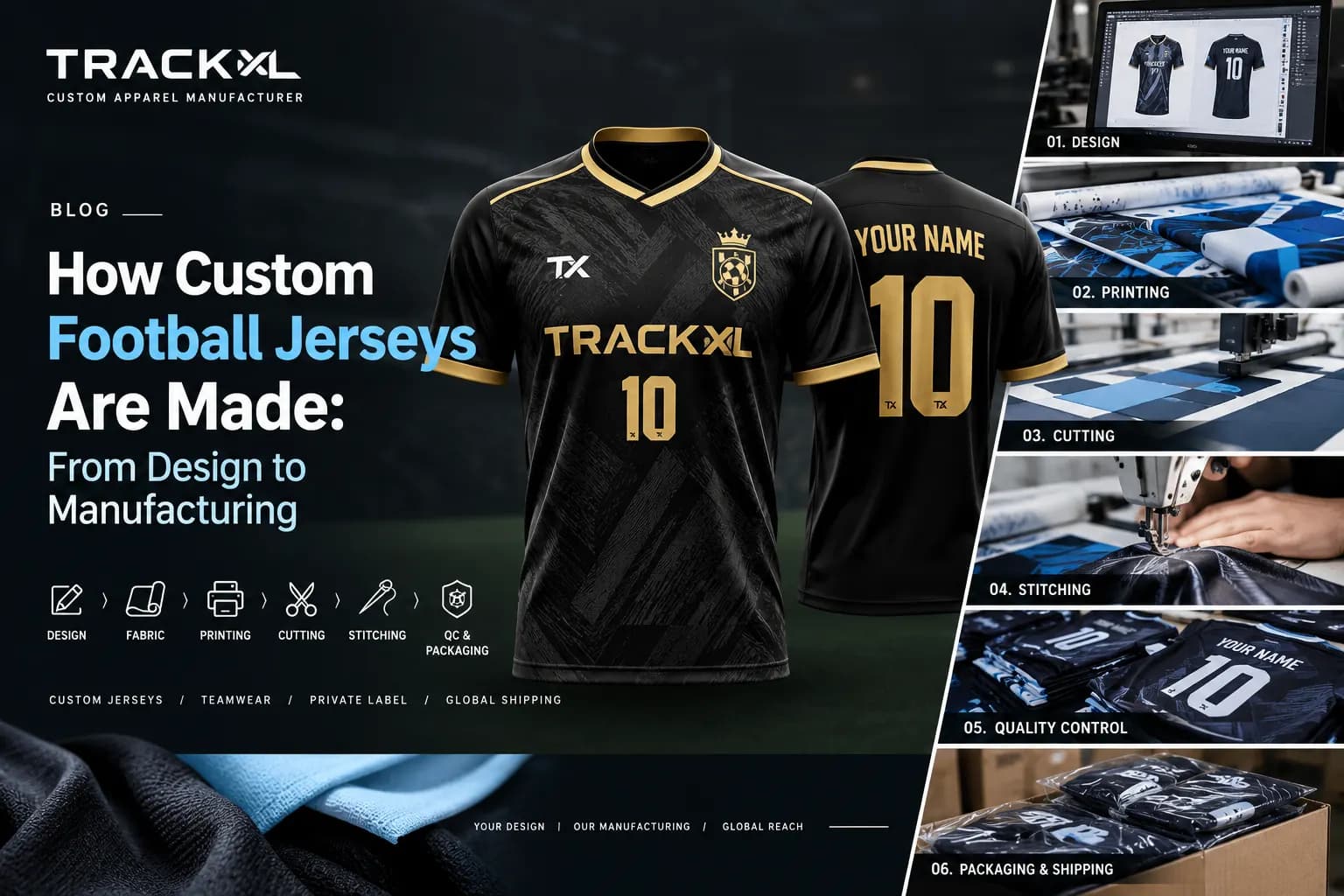
The manufacturer begins cutting, sewing, printing, embroidery and finishing.
Step 9: Quality Control
Products are checked for defects, measurements, branding, quantity and finishing.
Step 10: Packing & Shipping
Finished products are packed according to your requirements and prepared for international shipment.
11. Never Skip the Sample
For a new brand, the sample is one of the most important steps.
A digital design can look perfect while the physical product feels completely different.
Your sample allows you to evaluate:
Fit
Does the garment match your intended measurements?
Fabric
Does it feel, stretch and perform as expected?
Construction
Are the seams, stitching and finishing acceptable?
Branding
Is the logo the correct size and position?
Color
Does the physical color match your requirements?
Comfort
Can customers actually wear the product comfortably during activity?
Packaging
Does the finished presentation match your brand?
Only move to bulk production after you are satisfied with the approved sample and specifications.
12. Build Your Brand Into the Product
Private label manufacturing isn't just about putting a logo on a shirt.
Your brand can appear throughout the customer experience.
Garment Branding
Woven labels
Printed neck labels
Size labels
Logo embroidery
Heat-transfer logos
Screen printing
DTF printing
Puff printing
Chenille embroidery
Packaging
Custom polybags
Hang tags
Stickers
Branded boxes
Thank-you cards
Product inserts
A consistent combination of garment branding and packaging makes a product feel like a real brand rather than a generic wholesale item.
13. Quality Control Before Shipment
Quality control should happen throughout production—not only at the end.
Important checks include:
Fabric
Correct material
Correct GSM
Correct color
Consistent quality
Measurements
Chest
Length
Shoulder
Sleeve
Waist
Inseam
Other product-specific measurements
Construction
Stitching
Seams
Thread
Zippers
Waistbands
Cuffs
Branding
Logo position
Logo size
Print quality
Embroidery quality
Label placement
Final Packing
Correct quantity
Correct sizes
Correct labels
Correct packaging
Correct carton information
A clear quality-control process protects both the manufacturer and the buyer.
14. Plan Your Shipping and Import Costs
Once your products are ready, you need to move them from the factory to your destination country.
Common options include:
Express Courier
Useful for:
Samples
Small shipments
Urgent orders
Air Freight
Useful for:
Medium-sized shipments
Faster international delivery
Sea Freight
Useful for:
Large commercial orders
Lower shipping cost per unit when time allows
Your shipping decision depends on:
Quantity
Weight
Carton dimensions
Destination
Delivery deadline
Budget
Always calculate shipping and import costs before finalizing your retail pricing.
15. Common Mistakes New Sportswear Brands Make
Mistake 1: Choosing the Cheapest Factory
Price matters, but it shouldn't be the only factor.
Mistake 2: Ordering Bulk Without a Proper Sample
Always approve the physical product first.
Mistake 3: Launching Too Many Products
A huge first collection can tie up your capital in inventory.
Mistake 4: Not Defining the Fabric
"Premium fabric" isn't a technical specification.
Define the actual material, GSM and performance requirements.
Mistake 5: Ignoring Measurements
A good-looking product can still fail because of poor fit.
Mistake 6: Not Calculating Landed Cost
Factory price isn't your final cost.
Mistake 7: Changing Specifications After Approval
Late changes can increase cost and delay production.
Mistake 8: Not Checking Packaging
Your packaging is part of the customer's first impression.
Mistake 9: Not Planning Inventory
Don't manufacture more products than you realistically expect to sell.
Mistake 10: Treating the Manufacturer Like a Commodity
The best manufacturing relationships are built around clear communication, specifications, quality and long-term cooperation.
16. Private Label Sportswear Launch Checklist
Before you place your first production order, make sure you have considered:
Brand
Brand name
Logo
Target market
Target customer
Brand positioning
Products
Product category
Product designs
Colors
Size range
Fabric
GSM
Measurements
Technical specifications
Manufacturing
Manufacturer selected
MOQ confirmed
Quotation received
Sample developed
Sample approved
Production timeline confirmed
Quality requirements confirmed
Branding
Woven labels
Size labels
Hang tags
Logo application
Packaging
Logistics
Shipping method
Destination
Shipping cost
Import costs
Delivery timeline
Launch
Product photography
Website
Product descriptions
Social media
Marketing strategy
Inventory plan
17. How to Choose the Right Manufacturer for Long-Term Growth
Your first order is important—but your relationship with the manufacturer can become even more important as your brand grows.
A good manufacturing partner should be able to support you as you move from:
Sample → Small Batch → First Collection → Repeat Orders → Larger Production
Look for a supplier that can maintain consistency when your quantities increase.
Important long-term factors include:
Consistent fabric sourcing
Repeatable sizing
Reliable production
Clear communication
Quality control
Product development
Packaging support
Export experience
Ability to scale
Your manufacturer should not simply produce your first order.
Ideally, they become part of your product-development and supply-chain process.
18. Why TrackXL?
Build Your Sportswear Brand With TrackXL
At TrackXL, we work with brands and businesses looking for custom sportswear manufacturing and private label production from Sialkot, Pakistan.
From product development and sampling to custom branding, bulk production and export preparation, our goal is to make the manufacturing process straightforward for international buyers.
Our manufacturing support can include:
Private label sportswear
OEM manufacturing
Custom sportswear
Custom designs
Product sampling
Fabric selection
Custom labels
Custom packaging
Printing
Embroidery
Bulk production
Quality control
International shipping
Whether you're developing your first product or expanding an existing sportswear collection, the right manufacturing process starts with clear requirements.
Ready to Start Your Sportswear Brand?
Send TrackXL your:
Product design + quantity + customization requirements + destination
and our team can review your project and provide the next steps for manufacturing.
Request a Quote →
Frequently Asked Questions
What is private label sportswear?
Private label sportswear is clothing manufactured by a third-party factory and sold under your own brand. The product can be customized with your designs, colors, logos, labels and packaging.
How much does it cost to start a private label sportswear brand?
There is no single starting price because costs depend on product type, quantity, fabric, customization, packaging, sampling, shipping and import expenses. The best approach is to calculate the complete landed cost before setting your retail price.
What is the MOQ for private label sportswear?
MOQ depends on the manufacturer and production requirements. Stock materials and simpler customization can sometimes support smaller orders, while custom fabrics, custom colors and complex products may require higher quantities.
Always ask the manufacturer whether MOQ applies per style, color or total order.
Can a new startup work with a sportswear manufacturer?
Yes. Startups can work with manufacturers by starting with a focused collection, controlling the number of products and colors, using suitable available materials where possible, and testing samples before committing to larger production.
What is the difference between private label and OEM?
Private label focuses on selling products under your own brand, while OEM generally refers to manufacturing products according to the buyer's specific technical and design requirements. The exact terminology can vary between manufacturers, so always confirm what a supplier means by each service.
Do I need a tech pack?
A tech pack is highly recommended for fully custom products. It gives the manufacturer clear information about measurements, materials, construction, branding and other technical requirements.
However, depending on the manufacturer, you may also be able to start development using a sketch, reference image or existing sample.
How long does sportswear manufacturing take?
Production time varies according to product complexity, quantity, fabric availability, sampling requirements and the manufacturer's production schedule. Always confirm the sample and bulk-production timeline before placing an order.
Can I customize labels and packaging?
Yes. Private label programs commonly allow brands to customize labels, hang tags, packaging and other brand elements. Confirm the available options and any minimum quantities with your manufacturer.
How do I find a reliable sportswear manufacturer?
Compare manufacturers based on product expertise, samples, MOQ, communication, quality control, production capabilities, export experience, branding options and transparency—not simply the lowest price.
Final Thoughts
Starting a private label sportswear brand in 2026 doesn't require owning a factory.
What it does require is good product planning, clear specifications, the right manufacturing partner and careful quality control.
Start with a focused product range.
Define your customer.
Choose the right fabrics.
Prepare clear specifications.
Develop and approve samples.
Understand MOQ and landed costs.
Build your branding into the garments and packaging.
Then scale production as your market grows.
For international brands, the manufacturer you choose can have a direct impact on product quality, delivery, margins and ultimately your customer's experience.
The goal isn't simply to find a factory that can make clothing. It's to find a manufacturing partner that can help you build products your brand can stand behind.
Start Your Private Label Sportswear Project With TrackXL
Have a design, tech pack, reference product or simply an idea?
Send us your requirements and let's discuss your next sportswear collection.
TrackXL — Custom Sportswear Manufacturer | Private Label & OEM Production