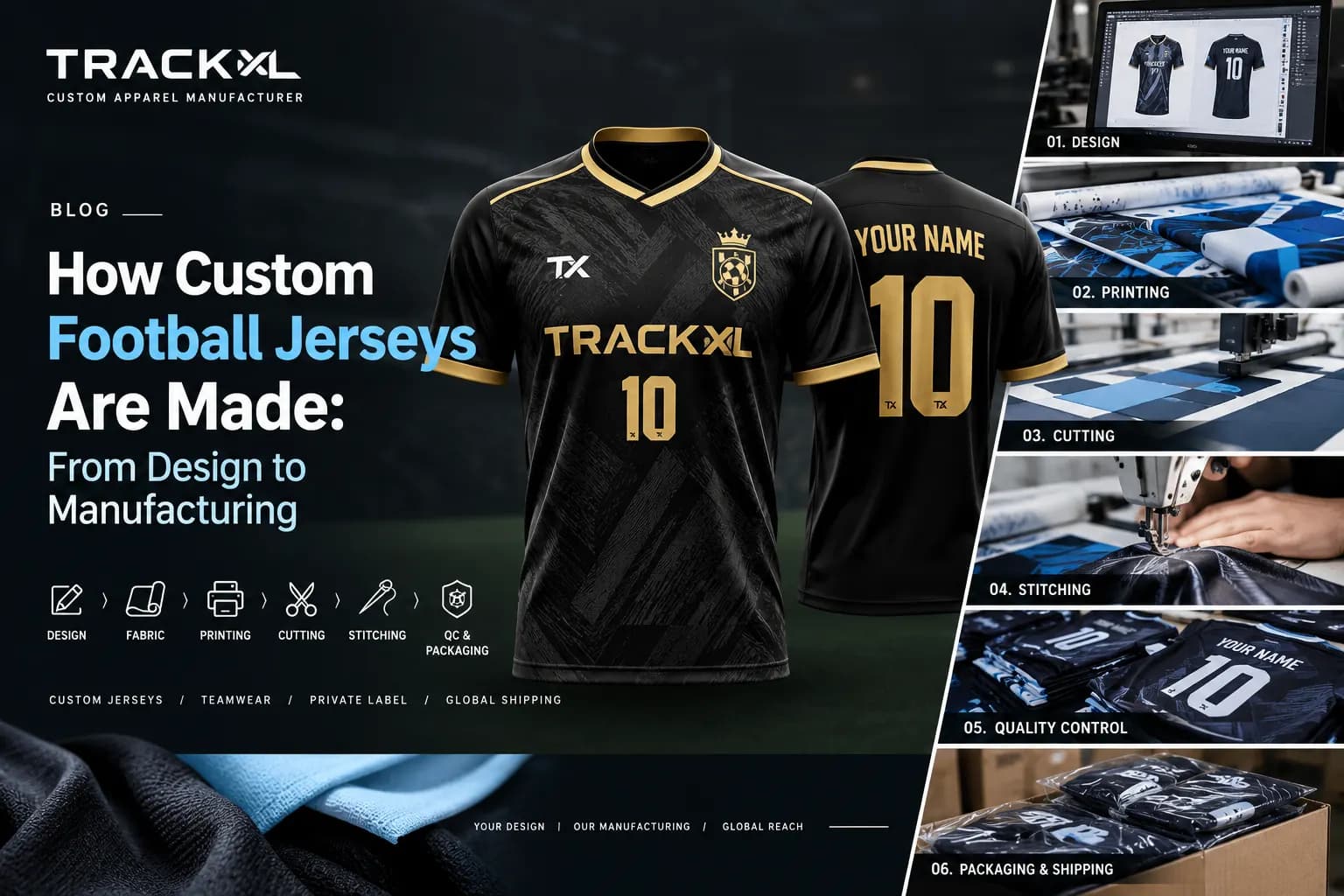
How Custom Football Jerseys Are Made: From Design to Manufacturing
A custom football jersey is more than just a shirt with a team logo. Behind every professional-looking football kit is a detailed manufacturing process that combines design, fabric selection, printing, cutting, stitching, customization, quality control, and finishing.
Whether you are a football club, academy, sports team, clothing brand, distributor, or business planning to launch your own football apparel line, understanding how custom football jerseys are made can help you make better decisions when choosing a manufacturer.
At TrackXL, we manufacture custom sportswear for businesses, teams, clubs, and brands looking for reliable custom football jersey manufacturing and private-label apparel production.
In this guide, we explain the complete process — from the first design concept to the finished football jersey ready for delivery.
What Is a Custom Football Jersey?
A custom football jersey is a football shirt manufactured according to a customer's specific requirements.
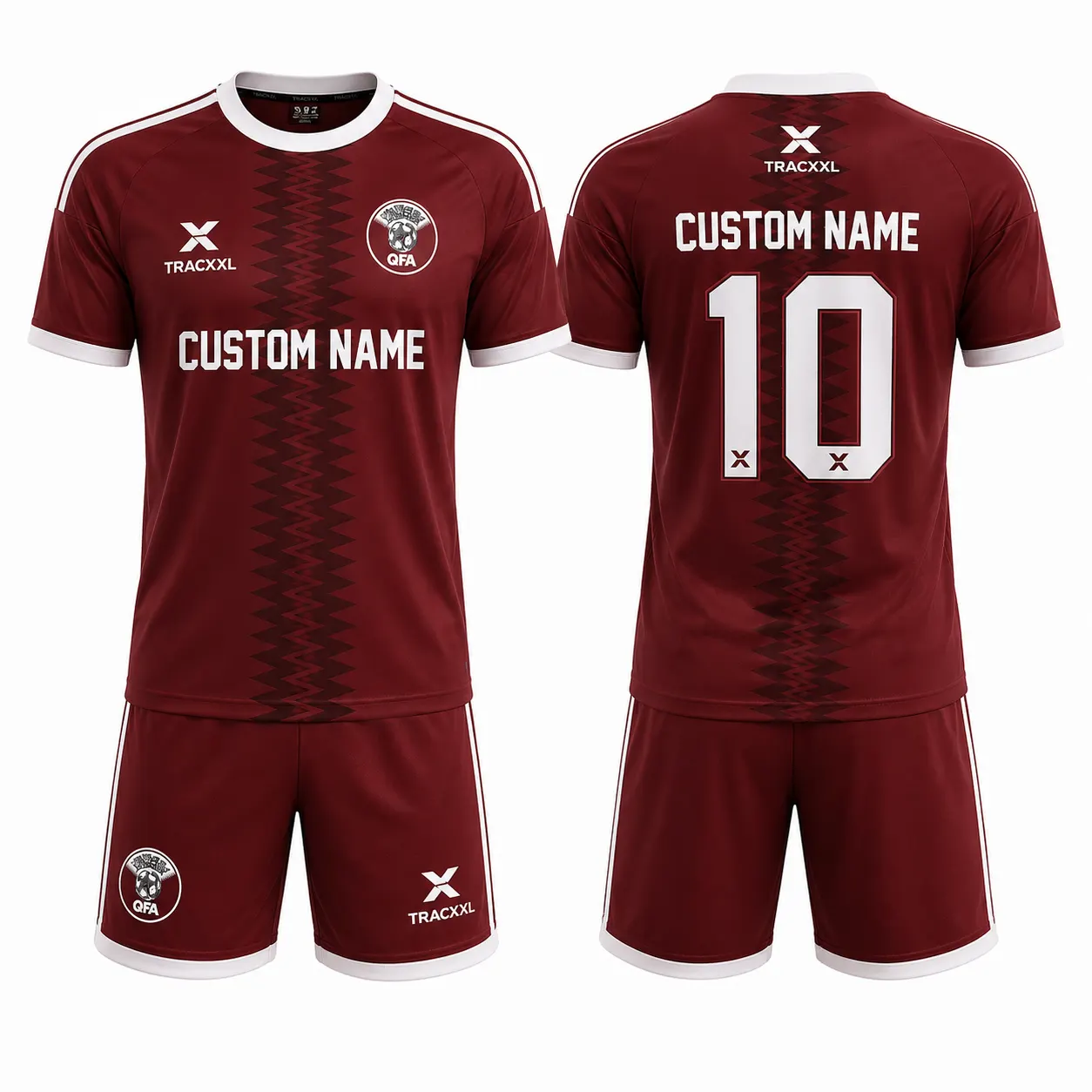
Unlike standard ready-made jerseys, custom jerseys can be personalized with:
Team colors
Club logos
Player names
Player numbers
Sponsor logos
Custom patterns
Sleeve designs
Collar styles
Brand labels
Custom packaging
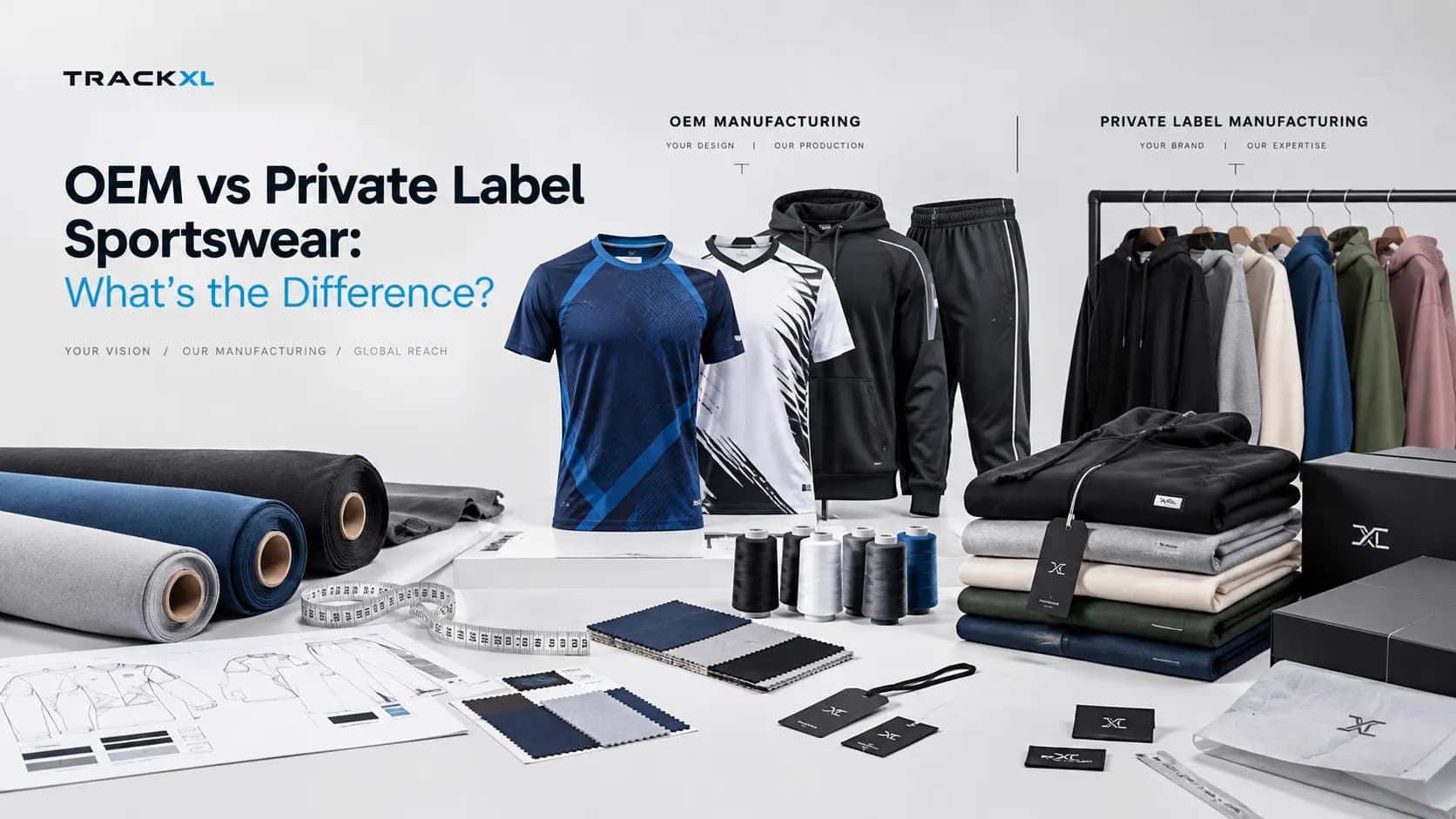
For businesses and sports brands, custom football jerseys can also be produced under a private label, allowing the buyer to add their own neck labels, woven labels, hangtags, packaging, and branding.
The Custom Football Jersey Manufacturing Process
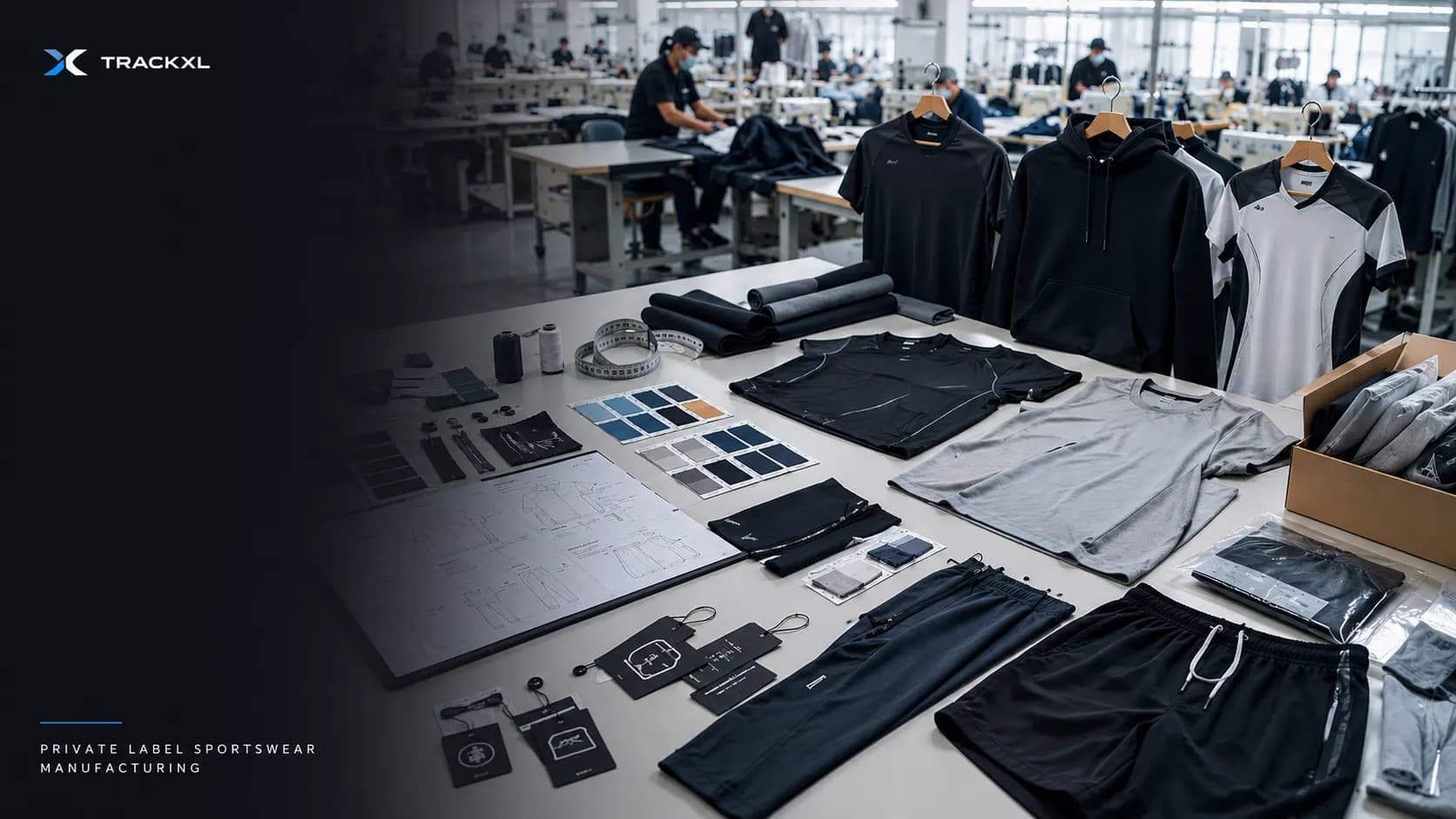
A professional football jersey manufacturer normally follows several stages before a finished jersey reaches the customer.
The process can be summarized as:
Design → Fabric Selection → Artwork Preparation → Sublimation Printing → Cutting → Sewing → Customization → Quality Control → Finishing → Packaging → Shipping
Let's look at each stage in detail.
1. Football Jersey Design
Everything starts with the design.
The customer may provide a finished design, reference image, sketch, logo, or even just an idea. The manufacturer then converts the concept into production-ready artwork.
A football jersey design normally includes:
Front design
Back design
Sleeve design
Collar design
Team logo
Sponsor placement
Player name
Player number
Color specifications
Size specifications
For professional production, the artwork needs to be prepared according to the actual jersey pattern. This helps ensure that graphics, logos, stripes, gradients, and other elements are positioned correctly after the fabric is cut and sewn.
At Track XL, we can work with customer-provided designs or develop custom concepts according to a brand or team's requirements.
2. Choosing the Right Football Jersey Fabric
Fabric plays an important role in the performance, comfort, appearance, and durability of a football jersey.
For performance football and soccer jerseys, polyester-based fabrics are commonly used because they are lightweight and suitable for sportswear applications.
Common options include:
Polyester interlock
Polyester mesh
Pin-dot mesh
Performance polyester
Moisture-management fabrics
The exact fabric and GSM should be selected according to the intended use of the jersey.
For example, match jerseys may require lightweight, breathable fabrics, while training jerseys or fanwear may use different fabric constructions.
For sublimation printing, polyester is particularly important because dye-sublimation transfers the design into the polyester fibers rather than creating a conventional surface print.
3. Preparing the Artwork for Production
Once the design and fabric are approved, the artwork is prepared for manufacturing.
The manufacturer checks important details such as:
Dimensions
Colors
Logo placement
Sponsor positions
Player numbers
Names
Seam allowances
Size grading
Print alignment
This stage is important because a design that looks correct on a computer screen may need adjustments when it is converted into actual garment panels.
For bulk orders, accurate artwork preparation helps maintain consistency across hundreds or thousands of jerseys.
4. Sublimation Printing
One of the most popular methods for producing fully customized football jerseys is dye-sublimation printing.
In sublimation, the design is printed onto transfer paper and then transferred onto polyester fabric using controlled heat and pressure.
The dye becomes integrated with the polyester fibers rather than sitting as a thick layer on top of the fabric.
This makes sublimation particularly useful for designs containing:
Multiple colors
Gradients
Stripes
Geometric patterns
Sponsor logos
Team graphics
Full-body artwork
Another advantage is that the printed area maintains the lightweight feel of the sports fabric.
The exact temperature, pressure, and time depend on the fabric, ink, machinery, and production setup, so manufacturers should use their validated production settings rather than relying on one universal specification.
5. Cutting the Fabric Panels
After printing, the fabric is prepared for cutting.
A football jersey is not normally sewn from one large piece of fabric. It consists of multiple panels that are cut according to the approved pattern.
Depending on the design, these can include:
Front body panel
Back body panel
Sleeves
Collar
Side panels
Mesh ventilation panels
Additional trims
Precision cutting is essential because even small inaccuracies can affect the final fit and alignment of the jersey.
Professional manufacturers use garment patterns and cutting systems to maintain consistency across different sizes.
6. Sewing and Jersey Assembly
Once all panels have been cut, they move to the sewing department.
The panels are assembled step by step to create the finished jersey.
The sewing process may include:
Joining the front and back panels
Attaching sleeves
Sewing side panels
Attaching the collar
Reinforcing important seams
Finishing hems
Checking seam alignment
The stitching construction should be selected according to the garment's intended use.
A football match jersey needs to be comfortable and durable enough for repeated movement, stretching, training, and washing.
7. Adding Names, Numbers, Logos and Sponsors
After the main garment has been assembled, additional customization may be applied depending on the design.
Football jerseys can include:
Player names
Squad numbers
Club badges
Sponsor logos
League patches
Brand logos
Woven labels
Embroidered details
Heat-transfer elements
Not every detail needs to use the same decoration method.
For example, certain badges may be embroidered or produced as woven/silicone patches, while names and numbers may use heat-transfer applications.
The best method depends on the design, fabric, quantity, durability requirements, and desired appearance.
8. Quality Control
Quality control is one of the most important stages of custom football jersey manufacturing.
Before an order is packed, manufacturers should inspect the garments for issues such as:
Incorrect measurements
Print defects
Color inconsistencies
Logo positioning
Stitching problems
Loose threads
Fabric defects
Incorrect names or numbers
Size-label errors
Packaging mistakes
For team orders, size accuracy is particularly important because one order may contain multiple sizes and individual player names and numbers.
A professional quality-control process helps reduce mistakes before the products are shipped.
9. Finishing and Final Inspection
After quality inspection, the jerseys go through final finishing.
This may include:
Removing loose threads
Pressing or steaming
Final measurement checks
Folding
Label verification
Individual packaging
Applying hangtags
Preparing cartons
For private-label customers, packaging can also be customized according to the brand's requirements.
This is especially useful for clothing brands that want their football jerseys to arrive ready for retail or direct-to-customer fulfillment.
10. Packaging and International Shipping
Once the jerseys are approved, they are packed for shipment.
Depending on the customer's requirements, football jerseys can be packed individually or grouped into team sets.
For international orders, manufacturers may prepare export cartons and shipping documentation before the goods are handed over to the selected logistics provider.
At TrackXL, we work with international customers looking for custom sportswear manufacturing and worldwide apparel production.
What Information Does a Football Jersey Manufacturer Need?
If you are planning to order custom football jerseys, providing complete information can make the production process faster and more accurate.
A manufacturer will typically need:
1. Design
Send your jersey design, reference, sketch, or artwork.
2. Quantity
Specify the total number of jerseys required.
3. Size Breakdown
Provide the required quantities for each size.
For example:
XS
S
M
L
XL
2XL
3XL
Youth sizes
4. Logo Files
Vector files such as AI, EPS, SVG, or high-resolution artwork are preferred where available.
5. Names and Numbers
For team orders, provide the complete player list and corresponding numbers.
6. Fabric Preference
If you have a preferred fabric or GSM, provide the specification.
7. Branding Requirements
Tell the manufacturer whether you need:
Neck labels
Woven labels
Hangtags
Custom packaging
Brand bags
Private labeling
8. Delivery Requirements
Provide the destination country and required delivery timeframe.
The more accurate the information, the easier it is for a manufacturer to prepare an accurate quotation and production plan.
Custom Football Jerseys vs Ready-Made Jerseys
One of the biggest advantages of choosing custom football jerseys is the flexibility they offer compared to standard ready-made products.
With ready-made jerseys, you are usually limited to pre-designed styles, fixed colors, and existing branding. Custom football jerseys, on the other hand, give teams, clubs, and brands complete control over the final product.
You can customize important details such as:
Team colors and patterns
Club or brand logos
Player names and numbers
Sponsor logos
Jersey design and graphics
Collar and sleeve styles
Private labels and branding
Custom packaging
For football clubs and teams, customization allows the entire kit to represent their unique identity and create a professional appearance.
For sportswear and apparel brands, private-label football jersey manufacturing provides the opportunity to create unique products under their own brand. From the jersey design and labels to packaging and branding, businesses can develop a complete football wear collection tailored to their target market.
In comparison, ready-made jerseys offer convenience but provide limited customization. Custom manufacturing gives you greater control over the design, branding, and overall appearance of your football apparel.
Why Choose a Professional Custom Football Jersey Manufacturer?
Choosing the right manufacturer can have a major impact on the quality and consistency of your football apparel.
A reliable manufacturer should be able to provide:
Consistent Quality
Every jersey in a bulk order should follow the approved specifications.
Production Expertise
Experienced manufacturers understand fabric behavior, garment construction, printing, sizing, and finishing.
Customization
Your manufacturer should be able to produce designs according to your specific requirements instead of forcing you into standard templates.
Private Label Manufacturing
For brands, private labeling allows you to build your own identity through custom labels, packaging, and branding.
Quality Control
A structured inspection process helps reduce defects and production errors.
International Production Support
For overseas customers, clear communication, documentation, packaging, and shipping coordination are important parts of the manufacturing process.
Custom Football Jerseys for Clubs, Teams and Brands
Custom football jerseys are used by many different types of customers.
Football Clubs
Clubs can manufacture home kits, away kits, third kits, training jerseys, goalkeeper kits, and teamwear.
Football Academies
Academies can create customized kits for different age groups and teams.
Amateur and Community Teams
Local teams can create unique jerseys with their own colors, logos, names, and numbers.
Sports Brands
Sportswear brands can develop custom football collections and sell them under their own labels.
Distributors and Retailers
Wholesale buyers can source customized football jerseys for their customers or retail channels.
Private Label Football Jersey Manufacturing
If you are building a sportswear brand, private-label football jersey manufacturing can give you more control over your product identity.
Instead of selling a generic jersey, you can create a product featuring:
Your brand logo
Custom neck labels
Woven labels
Custom hangtags
Brand packaging
Custom colors
Unique designs
Your own sizing specifications
This makes private-label production particularly attractive for startups and established sportswear brands looking to expand their product range.
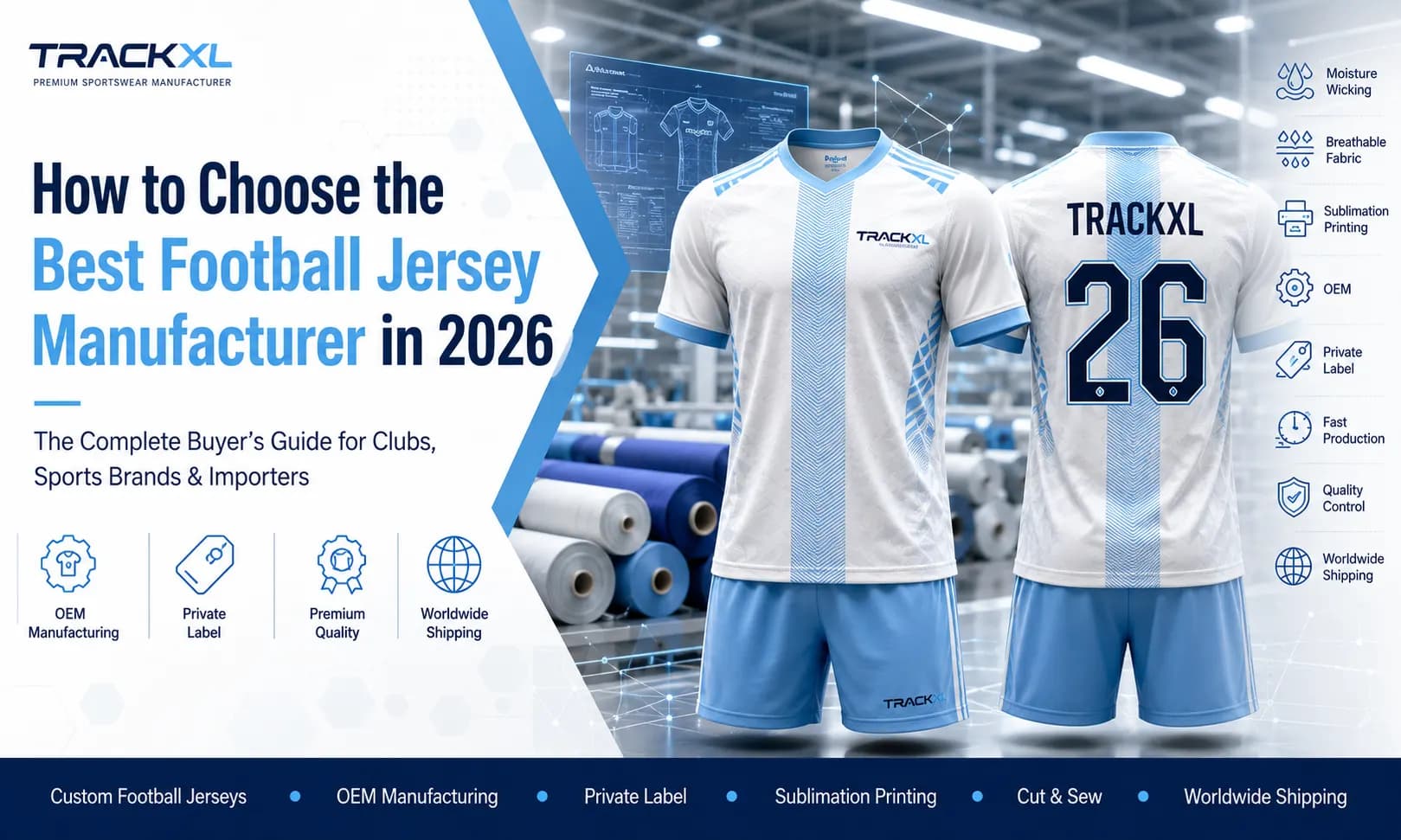
How to Choose the Right Football Jersey Manufacturer
Before placing a bulk order, consider several factors.
Check Manufacturing Capabilities
Make sure the manufacturer can produce the type of jersey you actually need.
Ask About Samples
A sample allows you to evaluate the fabric, fit, print quality, stitching, and overall construction before bulk production.
Confirm Customization Options
Ask about sublimation, embroidery, heat transfer, labels, packaging, and other branding options.
Review Quality Control
Understand how the manufacturer checks finished products before shipping.
Discuss MOQ
Minimum order quantities can vary significantly between manufacturers and products. Always confirm the MOQ for your specific design and requirements.
Confirm Production and Shipping Timelines
Ask for realistic production and delivery estimates before placing an order.
Communicate Your Specifications Clearly
A detailed specification sheet or tech pack can help prevent misunderstandings.
Why Manufacturing Location Matters
Pakistan is widely known for its sports goods and apparel manufacturing industry, with Sialkot being an important production center for sports products.
For international buyers, working with a manufacturer in a major production hub can provide access to experienced production teams, sportswear manufacturing capabilities, and established export infrastructure.
However, the location alone should never be the only factor when selecting a supplier. Buyers should evaluate quality, communication, production capabilities, samples, MOQ, lead time, and reliability.
Why Choose TrackXL for Custom Football Jerseys?
At TrackXL, our focus is helping brands, teams, clubs, and businesses turn their apparel ideas into finished products.
Our sportswear manufacturing capabilities include:
Custom football jerseys
Football teamwear
Custom soccer jerseys
Sportswear manufacturing
Private-label sportswear
Custom tracksuits
Training wear
Gymwear
Custom apparel
Custom branding
Custom packaging
We can work with customer-provided designs and specifications to develop products according to the required style, fabric, sizing, branding, and quantity.
Whether you need football jerseys for a team or are developing a new sportswear collection for your clothing brand, the goal is the same: consistent quality, accurate customization, and reliable manufacturing.
Frequently Asked Questions About Custom Football Jerseys
How are custom football jerseys made?
Custom football jerseys are generally produced through a series of stages including design development, fabric selection, artwork preparation, printing, cutting, sewing, customization, quality control, finishing, and packaging.
What fabric is used for football jerseys?
Polyester-based performance fabrics are commonly used for football jerseys because they are lightweight and suitable for sportswear. The exact fabric and GSM depend on the desired performance and garment specification.
What is sublimation printing on football jerseys?
Sublimation is a printing process where dye is transferred into polyester fabric using heat. It is particularly useful for detailed, full-color football jersey designs.
Can I put my own logo on a football jersey?
Yes. Custom football jerseys can include club logos, brand logos, sponsor logos, player names, numbers, and other graphics depending on the production requirements.
Can football jerseys be manufactured under my own brand?
Yes. Private-label football jersey manufacturing can include custom labels, hangtags, packaging, branding, and other brand-specific details.
Can I order custom football jerseys for a team?
Yes. Football clubs, academies, amateur teams, schools, and other organizations can order customized team jerseys with individual names and numbers.
Can TrackXL manufacture football jerseys in bulk?
Yes. TrackXL works with businesses, teams, brands, and organizations looking for custom apparel and sportswear manufacturing.
Final Thoughts
A high-quality custom football jersey requires much more than printing a logo onto a shirt.
From the initial design and fabric selection to sublimation, precision cutting, stitching, customization, quality control, and packaging, every stage contributes to the final product.
For football clubs, academies, teams, sports brands, and distributors, choosing an experienced custom football jersey manufacturer can make the difference between an average product and a professional-quality kit.
If you are looking to develop custom football jerseys, private-label football kits, or custom sportswear, TrackXL can help turn your requirements into finished apparel.
Ready to develop your custom football jerseys?
Contact TrackXL with your design, quantity, sizes, branding requirements, and delivery destination to discuss your project.
TrackXL — Custom Apparel & Sportswear Manufacturing