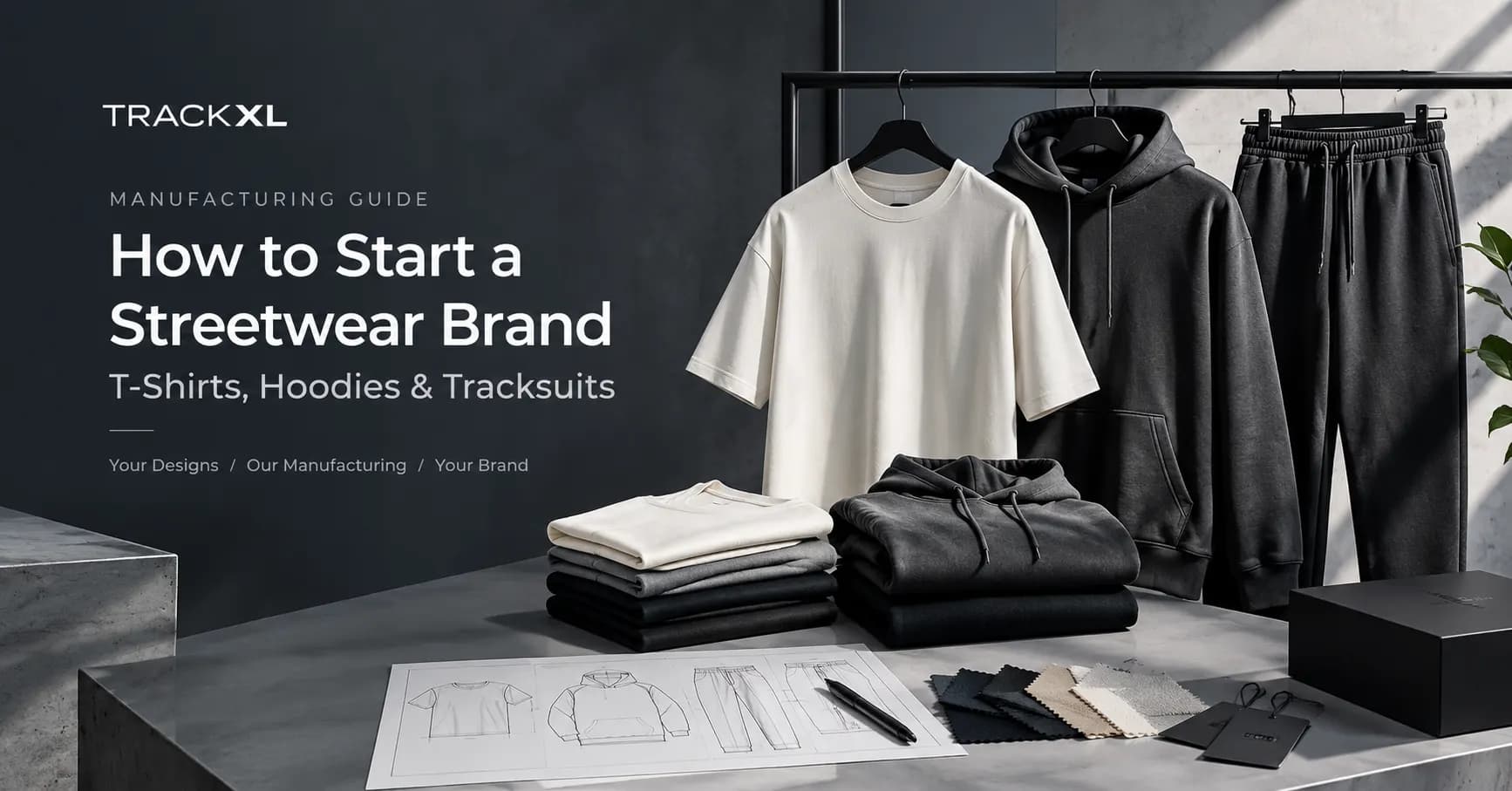
How to Start a Streetwear Brand: A Manufacturing Guide for T-Shirts, Hoodies & Tracksuits
Launching a streetwear brand requires more than creative graphics and a recognizable logo. To build a collection that customers want to wear, brands need to consider garment fit, fabric quality, construction, branding, product consistency, and manufacturing costs.
For businesses in the United States, working with an experienced custom apparel manufacturer can help turn original designs into finished products for retail, e-commerce, and wholesale distribution.
Whether you're developing oversized T-shirts, heavyweight hoodies, matching tracksuits, or a complete streetwear collection, understanding the manufacturing process can help you make better decisions before placing a bulk order.
At TrackXL, we work with businesses seeking custom apparel manufacturing and private-label production from Sialkot, Pakistan. This guide explains the important decisions streetwear brands should make before moving from an idea to production.
1. Define Your Streetwear Brand and Target Customer
Before selecting products, decide what your brand should represent and who you want to sell to.
Streetwear includes many different styles, from minimalist everyday essentials to oversized graphic apparel, vintage-inspired garments, premium basics, and coordinated casualwear.
Your intended customer influences the products you develop, the fabrics you choose, the fit you request, and the finishing details you need.
Consider the following questions:
Who is your target customer?
Will you focus on oversized streetwear, premium basics, graphic apparel, or matching sets?
What retail price range are you targeting?
Will you sell directly through your website, through retailers, or through both channels?
What makes your collection different from competing brands?
A clear direction makes it easier to develop products that belong together rather than launching unrelated designs.
2. Choose the Right Products for Your First Collection
One of the most important decisions is selecting the right products for your initial collection. Instead of developing too many styles at once, consider starting with a small range that reflects your brand identity.
Custom Streetwear T-Shirts
T-shirts are a practical starting point for many streetwear collections because they can support a wide range of fits, colors, graphics, and branding techniques.
Depending on your concept, you might develop:
Oversized heavyweight T-shirts
Relaxed-fit cotton T-shirts
Boxy streetwear tees
Raglan T-shirts
Graphic and logo T-shirts
Minimalist premium basics
For each style, define the desired silhouette, fabric composition, weight, neckline, sleeve length, and logo placement.
Explore TrackXL's heavyweight oversized T-shirt manufacturing option to see an example of a product developed for streetwear brands.
Custom Hoodies and Sweatshirts
Hoodies can become a core product in a streetwear collection, particularly when the brand focuses on relaxed silhouettes, layered outfits, or premium casualwear.
Possible styles include:
Pullover hoodies
Full-zip hoodies
Oversized hoodies
Washed-effect hoodies
Graphic hoodies
Custom sweatshirts
Important specifications include fabric composition, GSM, hood construction, ribbed cuffs, waistband, pocket style, zipper quality, and the intended fit.
For a more premium appearance, brands can consider embroidery, appliqué, puff printing, or other suitable logo applications depending on the design and fabric.
View TrackXL's custom full-zip hoodie manufacturing option for an example of custom hoodie development.
Custom Tracksuits and Matching Sets
Tracksuits and coordinated sets can help brands create a consistent collection with matching colors, fabrics, and design details.
A set may include a jacket and matching pants, while some collections combine hoodies or sweatshirts with coordinated joggers.
Before production, define:
Jacket and pants silhouettes
Fabric composition and weight
Zipper, pocket, and waistband details
Cuff and hem construction
Color matching between garments
Logo placement on each piece
Whether products will be sold together or separately
Matching sets require particular attention to fabric consistency and color coordination. A jacket and pair of pants should look like parts of the same collection, not separate products manufactured without a shared specification.
3. Select Fabrics Based on the Intended Product
Fabric selection affects appearance, comfort, durability, fit, and manufacturing cost. The right choice depends on how the garment will be worn and how your brand wants it to feel.
Cotton and Cotton Blends
Cotton is commonly considered for casual T-shirts and streetwear basics because of its familiar feel and versatility.
Cotton blends may be suitable when a brand wants a particular combination of comfort, durability, stretch, or shape retention. The best composition depends on the product's construction and intended use.
Fleece and Sweatshirt Fabrics
Hoodies, sweatshirts, and some tracksuits can use fleece or other sweatshirt fabrics. The choice depends on the required warmth, surface texture, weight, and overall appearance.
For example, a lightweight hoodie intended for layering has different requirements from a heavyweight hoodie designed for a structured silhouette.
Understanding GSM
GSM means grams per square meter and describes fabric weight.
A higher GSM can contribute to a heavier feel, but it does not automatically mean that a fabric is better. Fiber quality, knitting or weaving construction, finishing, shrinkage, durability, and the garment pattern also affect the final product.
When requesting a quotation, specify your preferred GSM where possible. If you are unsure, discuss the intended fit and appearance with your manufacturer before selecting the final fabric.
4. Develop the Fit and Measurements Before Production
Fit is one of the most important parts of streetwear product development. Two T-shirts made from similar cotton fabric can look completely different because of their patterns and measurements.
For an oversized T-shirt, specify the intended body width, garment length, shoulder drop, sleeve width, and sleeve length. For a hoodie, also consider hood dimensions, pocket placement, ribbed cuffs, and waistband proportions.
For tracksuits, the jacket and pants need separate measurement charts.
A technical specification or tech pack should ideally include:
Front and back technical drawings
Fabric composition and GSM
Color references
Size chart and measurement points
Stitching and construction details
Logo dimensions and placement
Labels and packaging requirements
If you already have a successful sample or a reference garment, explain which details should be followed and which should be changed.
Clear measurements help reduce misunderstandings during product development and make it easier to evaluate the finished sample.
5. Choose the Right Custom Branding Methods
Branding is more than adding a logo to the front of a garment. The placement, finish, durability, and relationship between different branding elements can influence how a collection looks.
Screen Printing
Screen printing can be suitable for many graphic T-shirts and other apparel applications, particularly when the design and order quantity suit the setup.
DTF and Other Heat Transfers
Direct-to-film printing and other heat-transfer methods can be useful for selected logo and graphic applications. Suitability depends on the design, garment fabric, required finish, and production method.
Embroidery
Embroidery can create a textured, dimensional logo and is often considered for hoodies, sweatshirts, and selected T-shirt designs. The artwork and fabric should be evaluated to ensure that the embroidery works well on the finished garment.
Appliqué and Special Finishes
Sewn appliqué and other decorative techniques can help brands create distinctive visual details. Their suitability depends on the design, placement, garment construction, and production budget.
Your manufacturer should review the artwork and recommend an appropriate method rather than assuming that every technique will work equally well on every fabric.
6. Build a Consistent Private-Label Identity
Private-label streetwear allows a business to develop apparel under its own brand identity. The exact customization available depends on the manufacturer, product, and order requirements.
Branding options may include:
Woven neck labels
Printed neck labels
Size labels
Custom hang tags
Embroidered or printed logos
Branded packaging
Custom product colorways
You should decide which elements are essential before production begins.
For example, a brand may use the same woven label across its T-shirts and hoodies while choosing different logo applications for individual styles. Coordinated labels, packaging, and color choices help create a recognizable collection.
For more background on manufacturing models, read TrackXL's guide to OEM vs. private-label sportswear. The same general distinction can help apparel businesses understand how product specifications and brand ownership fit into a manufacturing relationship.
7. Understand MOQ and Plan Your First Production Order
MOQ stands for minimum order quantity. It refers to the minimum number of units a manufacturer requires for a particular order.
The applicable MOQ can vary according to the product, fabric, color, customization, printing method, and production requirements.
For a new streetwear brand, it is worth discussing the following before committing to production:
Minimum quantity for each product
Whether different sizes can be mixed
Whether different designs can be combined
Whether fabric and color choices affect the minimum
Sample costs and development requirements
Bulk production pricing at different quantities
A focused first collection may be easier to manage than a large range of unrelated products. However, the right quantity depends on your budget, expected demand, and the manufacturer's production requirements.
Do not assume that every product can share the same MOQ. Ask for confirmation based on your actual designs and specifications.
8. Approve a Sample Before Bulk Manufacturing
A product image or digital mockup cannot confirm every detail of a finished garment. A physical sample lets you evaluate the product before committing to a larger order.
When reviewing a sample, check:
Fabric feel and weight
Garment measurements
Fit and proportions
Stitching and seam quality
Print or embroidery finish
Logo placement
Zippers, cuffs, pockets, and other components
Labels and packaging, where applicable
For matching sets, review both garments together. For oversized styles, compare the sample against your intended measurement chart rather than relying only on the size label.
If changes are necessary, document them clearly and confirm the revised specifications before bulk production begins.
The approved sample and final written specifications should serve as the reference for the production order.
9. Calculate the Full Cost of Manufacturing and Importing
A factory quotation is only one part of your product's overall cost.
For US businesses sourcing from an overseas manufacturer, the total cost may include:
Garment manufacturing
Custom printing or embroidery
Labels and packaging
Sample development
International freight
Customs duties and applicable taxes
Customs brokerage and other import-related charges
Domestic transportation after arrival
The applicable import costs depend on factors such as product classification, materials, country of origin, shipment terms, and current regulations.
Before setting your retail price, estimate the full landed cost and account for other business expenses, including marketing, payment processing, warehousing, fulfillment, and returns where applicable.
When requesting a quotation, provide the intended quantities, product specifications, destination, and delivery requirements. This gives the manufacturer a clearer basis for preparing a useful estimate.
10. Plan Quality Control and Repeat Production
The first production run establishes a reference for future orders. If your brand grows, you will want subsequent batches to maintain the same fit, fabric, color, construction, and branding standards.
Before production, agree on the specifications that matter most. These may include:
Approved fabric composition and GSM
Measurement tolerances
Color references
Stitching and construction
Logo dimensions and placement
Label and packaging details
Inspection requirements
For repeat orders, keep the approved specifications and sample records organized. If a change is necessary, document it instead of assuming the manufacturer will automatically know what to adjust.
Consistency is especially important when selling the same product across multiple sizes, colorways, or production batches.
11. Prepare for Shipping to the United States
International shipping should be considered before production is finalized, especially if you are planning a product launch or have a fixed retail delivery date.
The appropriate shipping method depends on shipment size, weight, destination, budget, and required delivery window.
When requesting a shipping estimate, provide the destination ZIP code where possible and ask the supplier to clarify the proposed shipping method, estimated transit time, shipping charges, and applicable delivery terms.
Also confirm when the production timeline begins and whether sample approval, revisions, or packaging preparation affect the schedule.
Allow time for production, inspection, export handling, transit, and customs clearance. Do not base a launch date solely on the estimated factory production period.
12. How to Choose a Manufacturing Partner for Your Streetwear Brand
A useful manufacturing relationship starts with clear communication and realistic expectations.
Before placing an order, confirm that the supplier can meet your product requirements and explain its process for development, sampling, production, quality checks, and shipping.
Ask questions such as:
Can you manufacture from my tech pack or reference sample?
Which fabrics and GSM options are available?
What customization and branding methods can you offer?
What is the MOQ for each product?
Can you develop a sample before bulk production?
How are measurements and quality checked?
What are the production and shipping estimates?
Can you support repeat orders using approved specifications?
Compare quotations using the same product specifications. A lower price is not necessarily the better option if the garment construction, fabric, fit, or service differs from what your brand needs.
For a broader discussion of supplier evaluation, see our existing guide, How to Choose the Right Sportswear Manufacturer.
13. Develop Your Streetwear Collection With TrackXL
TrackXL is a custom apparel manufacturer based in Sialkot, Pakistan, working with businesses seeking customized apparel and private-label production.
For streetwear businesses, product development begins with understanding the design, fabric, fit, branding, quantity, and intended use of each garment.
Our streetwear range includes customizable options such as oversized T-shirts, hoodies, and other casualwear styles. Depending on the product and agreed specifications, customization may include fabric selection, garment details, logo applications, labels, and packaging.
Explore our custom streetwear manufacturing category to review available product options.
To discuss a potential order, prepare the product designs or reference images, estimated quantities, size range, preferred fabrics, branding requirements, and delivery destination. If you have a tech pack, include it with your inquiry.
These details help us understand your requirements and assess the appropriate manufacturing options for your collection.
Frequently Asked Questions
Can I manufacture custom streetwear under my own brand?
Yes. Private-label production can allow businesses to sell garments under their own brand identity, subject to the manufacturer's available customization options and agreed order requirements. Branding may include logos, labels, hang tags, and packaging.
What products can a streetwear brand manufacture?
A collection may include oversized T-shirts, heavyweight tees, hoodies, sweatshirts, joggers, tracksuits, jackets, and other casualwear. The best starting range depends on your brand identity and target customers.
What information should I send for a streetwear manufacturing quotation?
Share your product type, design or reference images, estimated quantity, size range, fabric requirements, GSM, branding details, packaging requirements, and delivery destination. A tech pack is useful when available.
Should I order a sample before bulk production?
A sample is strongly recommended because it allows you to evaluate the physical product, fit, measurements, construction, fabric, and branding before committing to bulk manufacturing.
Can I customize the fabric, fit, and logo?
Customization depends on the product and manufacturing requirements. Discuss your preferred fabric, measurements, color, logo application, labels, and packaging with the manufacturer before confirming your order.
How do I request a quotation from TrackXL?
Visit the TrackXL streetwear category to explore products, or use our contact page to discuss your requirements. Include as much product and order information as possible so that your inquiry can be evaluated accurately.
Ready to Develop Your Streetwear Collection?
Building a successful streetwear collection starts with clear product specifications, suitable fabrics, a well-defined fit, and a manufacturing process that supports consistent results.
Whether you're developing custom T-shirts, hoodies, tracksuits, or a coordinated apparel collection, planning these details before bulk production can help you make informed decisions and build a stronger product range.
Contact TrackXL to discuss your custom streetwear manufacturing requirements and request a quotation for your next collection.